
- 30/03/2025
- Category: Expert Tips
- Author: Kris Foster
- 124

Ever wondered why some tenants lose their deposits over cleaning? Others pass their inspections easily. It’s all about knowing what landlords expect. This guide will help you meet those standards.
Cleaning disputes are common, with 27% of cases about cleanliness. You want to leave the place as it was when you moved in. Are you ready to learn how to pass your inspection?
Tenants must understand the cleaning standards set by landlords and letting agencies. This is to ensure a smooth end to their tenancy. Landlords expect the property to be as clean as it was when the tenant first moved in.
This high standard can lead to disputes if tenants don’t meet their cleaning obligations. Knowing these expectations can help avoid problems with deposit deductions.
Cleaning standards vary but usually include a deep clean of all areas listed in the inventory. The cleanliness of a property is often the main reason for disputes over deposits. Since the Tenant Fees Act 2019 made it illegal for landlords to require professional cleaning, tenants are mainly responsible.
Landlords can deduct from the deposit if the property is not clean enough.
Some areas need more careful cleaning. These include:
Cleaning these areas well meets cleaning standards and helps avoid disputes over deposit deductions. Tenants might want to organise their cleaning well to ensure all obligations are met.
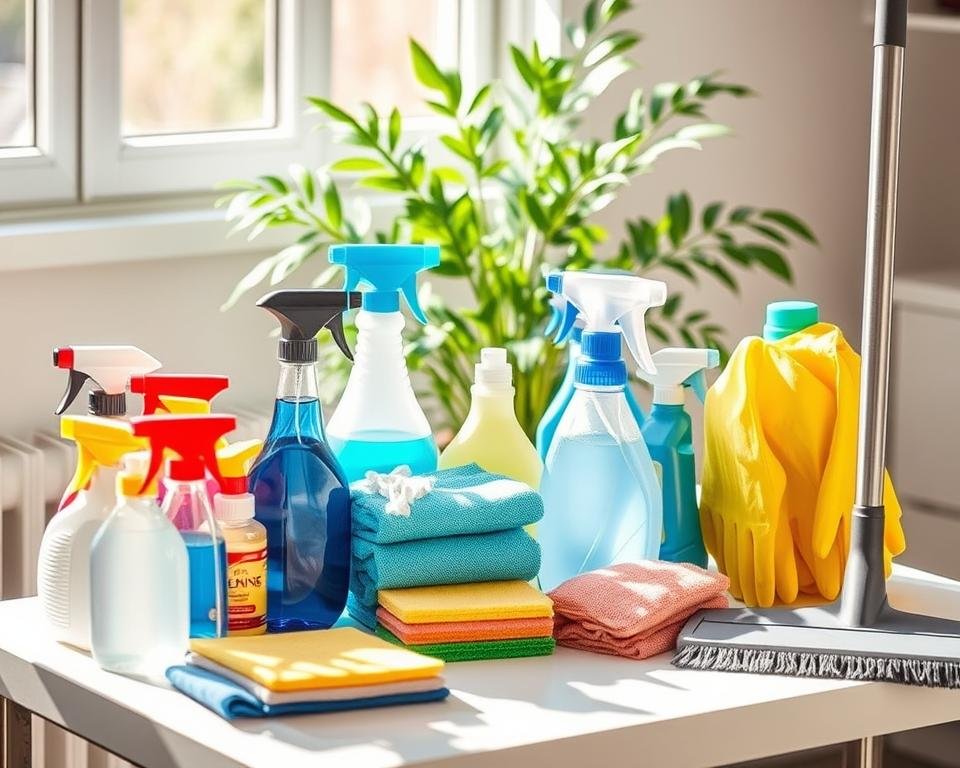
Effective end of tenancy cleaning starts with good preparation. First, gather all the cleaning supplies you need. This includes all-purpose cleaners, sponges, brushes, and vacuum cleaners. With these tools, cleaning becomes easier and faster.
Begin by making a list of cleaning supplies. This list should have:
Having these supplies ready makes cleaning different areas easier.
After getting your supplies, make a cleaning checklist. A detailed checklist for each room helps you not miss any spots. It should include tasks like:
Matching this checklist with your initial inventory helps focus on areas needing extra care. This ensures a deep clean before the inspection.
End of tenancy cleaning needs a lot of focus on key areas like the kitchen and bathroom. These places get used a lot and dirt and grease build up fast. So, cleaning them well is key for a good inspection.
When cleaning the kitchen, make sure to deep clean all surfaces and appliances. This will make sure everything is clean and shiny.
Cleaning the kitchen is very important in end of tenancy cleaning. Here are some key tasks:
Doing these tasks well makes the kitchen look clean and welcoming. This is good for landlords and new tenants.
Don’t forget about carpets, walls, and windows too. Here’s how to clean them:
Each of these steps helps make the property look better. If you need help, think about getting professional cleaners. They can make sure your home is ready for inspection. For more on professional cleaning, visit here.
Cleaning mistakes can really hurt your chances of passing an inspection. They often lead to missed spots that make a bad impression. It’s key for tenants to pay attention to small details and special places. If these are ignored, they can ruin the cleanliness score of the property.
Many tenants don’t see the big deal about dusting light fixtures and cleaning skirting boards. These spots can collect a lot of dirt and dust. This makes even a spotless room look like it’s been ignored.
Light fixtures get dusty, which can lower the property’s look. Skirting boards also hold dust and stains. They show poorly during an inspection.
Not paying attention to outdoor areas is another big mistake. Patios, gardens, and balconies need a lot of care. If they’re not clean, it shows the property isn’t well-maintained.
A tidy outdoor area makes the property look better. It shows you care about cleanliness and are ready for an inspection.
Many tenants try to clean their place themselves at the end of tenancy. But, sometimes it’s not enough, especially for tough stains or deep cleaning. Getting professional cleaning services can really help. It makes it more likely you’ll pass inspections and get your deposit back.
Dealing with tough stains, like on carpets or in ovens, can be hard. Professional cleaners have the right tools and know-how. They make sure your place is spotless, meeting or beating what landlords expect.
Deep cleaning helps avoid losing money from your deposit. This is because of small things like limescale in the bathroom or dust on shelves.
Trying to clean while moving can be stressful. Professional cleaning services take this off your hands. They let you focus on other important things.
These services also make sure you meet all cleaning standards. This helps the property handover go smoothly. By choosing cleaning experts, you’re more likely to pass the final inspection. This reduces the chance of deposit disputes.
It’s best to book these services three to four days before the final check. This gives landlords enough time for a detailed inspection.
For more info on when to book cleaning services, check out this resource.
As you near the end of your tenancy, it’s key to use tenant strategies for a smooth inspection. Start with a pre-inspection walkthrough with your landlord. This helps spot any extra cleaning needs before you leave, avoiding disputes.
Check each room carefully during the walkthrough. Talk about any concerns with your landlord. This teamwork makes cleaning easier and helps your next steps.
After the walkthrough, document your cleaning work. Photos and cleaning service receipts are important cleaning evidence if there’s a disagreement about the property’s state when you leave.
These steps can help you pass the successful inspection and get your deposit back. If more proof is needed, your documentation will help. Showing you’ve looked after the property well will help your tenancy end well.


