
- 08/10/2025
- Category: How To
- Author: Kristian Yordanov
- 62
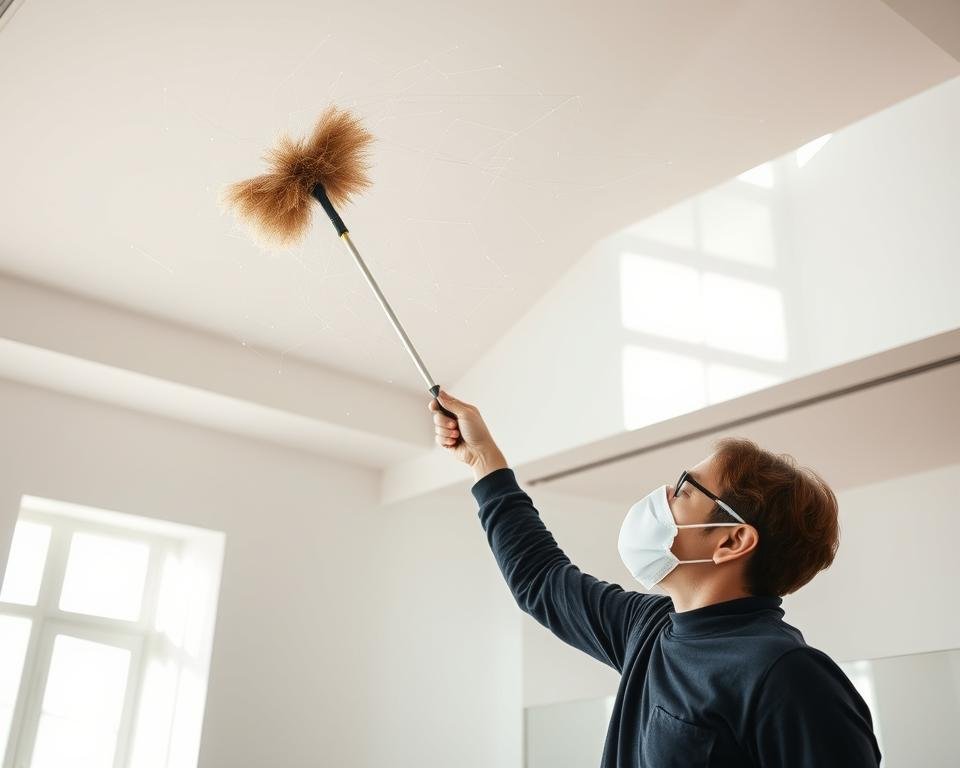
Ever thought about how cobwebs could affect your deposit during a clean-out? Often missed, cleaning high corners of cobwebs is key to keeping a place tidy. This can really impress landlords during checks.
With landlords getting stricter about spotless properties, getting rid of spider webs is crucial. It can make all the difference between keeping your deposit or losing some of it. This guide will show you how to clean cobwebs effectively, ensuring your rental is spotless.
Cobweb removal is key for end-of-tenancy cleaning. Cobwebs in high corners show neglect. This can harm a property’s look and affect a landlord’s decision on deposit returns.
A clean property is inviting. It makes a place more appealing to potential tenants. They look for places that show cleanliness and care.
Even small things like cobwebs can affect opinions during inspections. Landlords check every detail, including hard-to-reach areas. Cobwebs can show a lack of upkeep.
This can lead to disputes over cleaning standards. It might also affect how much of the deposit is returned.
Landlords focus on high ceilings and corners during inspections. Cobwebs highlight cleaning mistakes. A detailed check includes these often-neglected spots.
Ignoring these areas can lead to disputes. It might also mean losing part or all of the deposit.
Tenants often miss or clean high corners poorly. They might use the wrong tools or not clean thoroughly. About 40% of tenants lose some or all of their deposit due to this.
Following cleanliness standards can protect deposits. It also helps attract better tenants.
Cleaning cobwebs from high places is tough. It’s hard to reach tall ceilings and corners. You might need ladders or telescopic tools, which can be risky if not used carefully.
Trying to clean from high up can be tiring. This might stop you from cleaning well, leaving spider webs and issues behind.
High ceilings and corners are perfect for cobwebs. They’re often missed during cleaning, making them hard to get to. Using ladders for these tasks is dangerous and can lead to accidents.
Dust in corners can harm the air we breathe. It can cause health problems and allergies. Spiders make cleaning harder by creating more webs.
Even after you see no webs, there might still be hidden residue. Cleaning these areas well is key.
After cleaning, stopping new cobwebs is important. Regular checks and clean-ups are needed. Using good prevention tips, like regular inspections, helps keep areas clean and healthy.
To remove cobwebs well, you need the right tools and methods. Knowing how to clean safely and choose the best tools is key. Follow these steps for a clean home and safety.
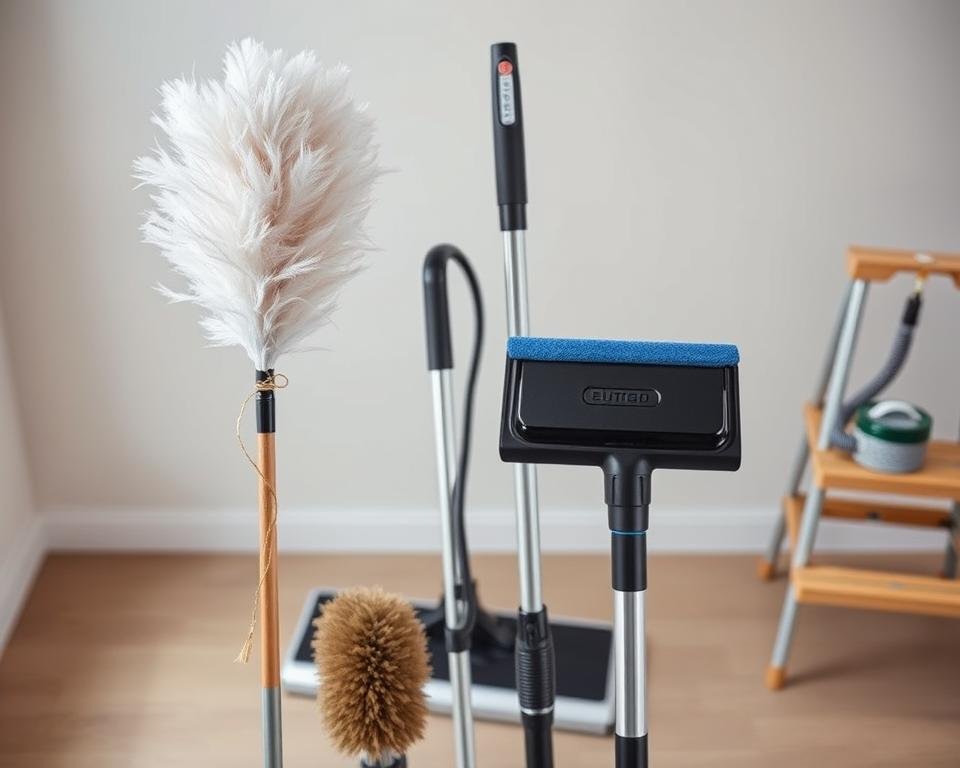
Choosing the right tools is crucial for removing cobwebs. Extendable dusters are great for high ceilings. They have soft bristles that pick up dust without spreading it.
Vacuums with special attachments are better for corners. They grab cobwebs and spider bits well.
Make sure your ladder is stable and on even ground. Always keep three points of contact when climbing. Telescopic poles let you reach high without climbing, making it safer.
Be careful when you’re in hard-to-reach spots to avoid falls.
The ceiling type affects how you clean it. For painted ceilings, use extendable dusters lightly to avoid damage. Vacuum cleaning works best on textured ceilings to get rid of tough cobwebs.
Adapting your cleaning method to the ceiling type makes it more effective.
Removing cobweb residue without damaging walls or paint is a challenge. Use a damp, soft cloth to wipe away particles gently. Stay away from harsh chemicals that can stain surfaces.
Regular cleaning helps prevent cobwebs from building up. This makes future cleaning easier.
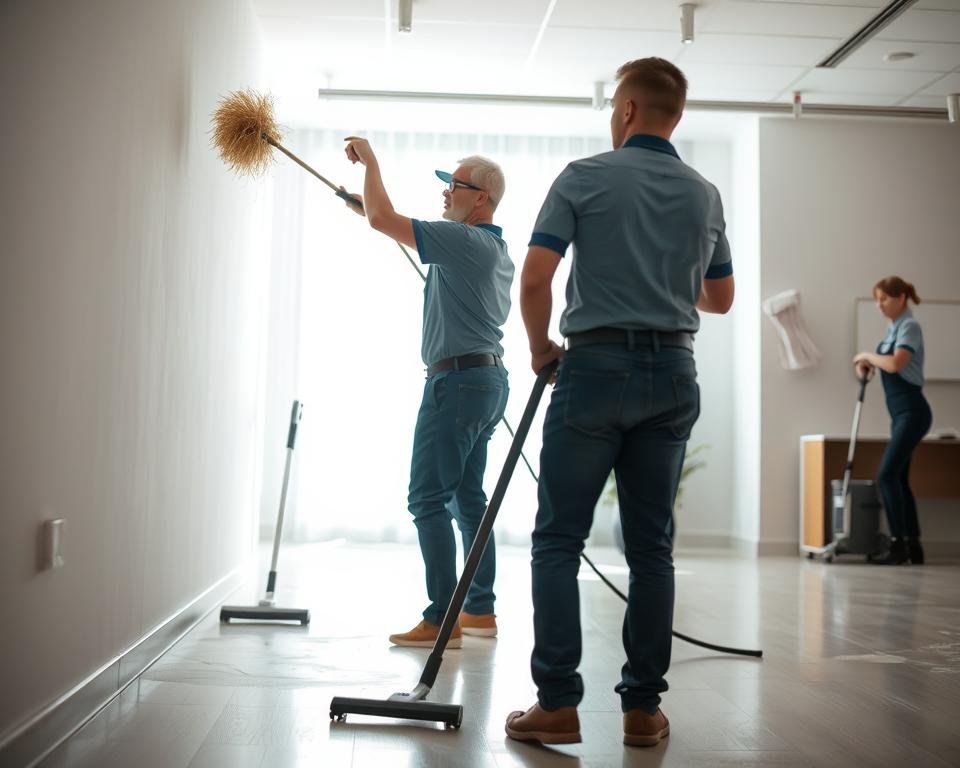
When dealing with cobwebs in hard-to-reach spots, tenants must decide between professional cleaners and DIY methods. Knowing the benefits of each can help remove cobwebs more effectively.
Professional cleaners are great for big cleaning jobs. They use vacuum cleaners, which 85% say work well for getting rid of cobwebs. They can clean high corners up to 30% faster than DIY methods.
For big homes or severe cobweb problems, hiring pros is a smart choice. It makes your space cleaner with less effort.
DIY cleaning can be cheaper. Making your own dusters costs $1-$2, much less than store-bought ones. Regular DIY cleaning can cut cobweb formation by 60% in a month.
Using extendable soft dusters can save about 30% of cleaning time. Natural solutions like vinegar and baking soda can also keep spiders away if used often.
Many DIY cleaners make mistakes that leave cobwebs behind. Manual removal might clear 70% of webs but doesn’t stop spiders. Not sealing cracks lets spiders keep coming back.
Knowing these mistakes helps achieve a cobweb-free home. Whether you choose pros or DIY, understanding these points is key.
To keep high corners free from cobwebs, a systematic approach is key. Regular dusting helps reduce dust, which spiders don’t like. Also, keeping areas well-ventilated discourages spiders from settling in.
Using natural spider repellents can boost your cleaning efforts. Essential oils like peppermint and tea tree can cut down spider numbers by about 70%. Placing these repellents in key areas helps keep your home spider-free.
Keeping ceilings and walls clean all year helps avoid last-minute cleaning. Sealing cracks and gaps around windows and doors can stop up to 80% of spiders from entering. Decluttering regularly, like behind furniture, can stop up to 75% of cobwebs. This keeps your home clean and welcoming.


