
- 01/03/2024
- Category: Expert Tips
- Author: Kris Foster
- 448

Do you love spending time outdoors, relaxing on your patio furniture and enjoying the fresh air? But what about those stubborn stains that seem impossible to remove? Whether it’s food and drink spills, mold and mildew, or pollen stains, keeping your outdoor furniture clean can be a challenge. But fear not! In this article, I will share with you the best practices for outdoor furniture stain removal. Get ready to say goodbye to those unsightly stains and hello to a pristine outdoor space!
When it comes to maintaining the appearance and longevity of your outdoor furniture, stain removal is an essential task. Different outdoor fabrics have unique features and characteristics that influence how stains are treated. In this section, I will provide an overview of the various fabric types used for outdoor furniture and the tools you need for effective stain removal.
Outdoor furniture can be made from a range of fabric types, each with its own set of qualities. Common choices include polyester, acrylic, olefin, and Sunbrella. Polyester is a durable and resistant fabric that is easy to clean. Acrylic is known for its softness and stain resistance. Olefin, a synthetic fabric, resists fading and stains. Sunbrella is a high-performance fabric renowned for its durability and resistance to both stains and fading.
Having the right tools is crucial for effective stain removal from outdoor furniture. Soft-bristled brushes are suitable for gently scrubbing stains without damaging the fabric. For tougher stains or debris removal from furniture surfaces, stiff-bristled brushes can be utilized. When it comes to cleaning agents, using a mild detergent with warm water is a common and effective approach. Oxygen-based bleach can be employed for the removal of tough stains and to enhance the brightness of the fabric. Enzyme-based stain removers, on the other hand, are ideal for tackling organic stains like food or pet stains. Always refer to the care instructions provided by the manufacturer to ensure that the tools and products you use are safe for the fabric.
Spring and Summer Solutions
During the spring and summer seasons, outdoor furniture is prone to various stains such as food and drink spills, sunscreen stains, and pollen. To effectively maintain the cleanliness of your outdoor furniture in these warm seasons, it is important to take the following steps:
- Treat food and drink spills promptly by blotting them with a clean cloth and cleaning them with a mild detergent and warm water.
- Pretreat sunscreen stains with a stain remover or detergent before washing the fabric according to the care instructions.
- Gently brush off pollen from outdoor furniture or use a soft cloth and mild detergent to remove any stains caused by pollen.
Autumn and Winter Tactics
When the autumn and winter seasons arrive, outdoor furniture faces different challenges, including mold and mildew growth, dirt buildup, and stains from leaves and snow. Here are some tactics to combat these colder season stains:
- To prevent mold and mildew growth, regularly clean and dry outdoor furniture, especially in damp and shady areas.
- Remove dirt buildup by brushing or vacuuming the furniture surfaces.
- Treat stains from leaves and snow by removing the debris and cleaning the fabric with a mild detergent and warm water.

The climate in London can be prone to dampness and humidity, which creates ideal conditions for mold and mildew growth on outdoor furniture. Regular cleaning and maintenance, including drying outdoor furniture thoroughly after rain, can help prevent mold and mildew growth.
If mold or mildew does appear, it can be treated by using a mixture of water and white vinegar or a commercial mildew remover. Scrubbing the affected areas with a soft brush and rinsing them with water will help remove mold and mildew stains.
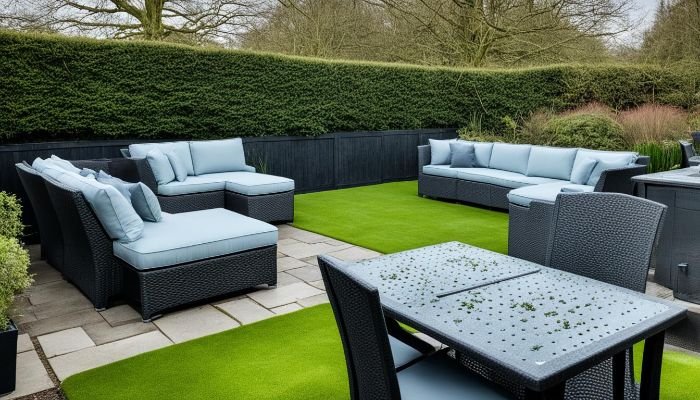
The climate in London can be prone to dampness and humidity, making outdoor furniture susceptible to mold and mildew growth. Regular cleaning and maintenance are essential to prevent and tackle mold and mildew. If mold or mildew appears, a mixture of water and white vinegar or a commercial mildew remover can help eliminate them. Scrubbing the affected areas with a soft brush and rinsing with water will remove mold and mildew stains.
Pollen can be a common problem for outdoor furniture in London, especially during the spring season. Regular cleaning and maintenance can help prevent pollen buildup and stains on outdoor furniture. Gently brushing or wiping off pollen with a soft cloth or brush can also effectively remove it from the fabric. If pollen stains do occur, cleaning the fabric with a mild detergent and warm water should be sufficient.
Keeping your outdoor furniture clean and well-maintained is essential for its longevity and appearance. Establishing a regular cleaning schedule is a proactive approach to ensure that your outdoor furniture remains in optimal condition.
Depending on the usage and weather conditions, it is recommended to clean your outdoor furniture at least once a season. However, if your furniture is exposed to heavy use or adverse weather, more frequent cleaning may be necessary.
When cleaning your outdoor furniture, start by removing any debris such as leaves, dust, or dirt. This can be easily done by brushing or vacuuming the surfaces. Pay attention to crevices and corners where debris tends to accumulate.
Spot cleaning any stains is another crucial step in maintaining your outdoor furniture’s cleanliness. Treat stains promptly by using a suitable stain remover or a mild detergent and warm water solution. Gently scrub the affected area with a soft brush or cloth and rinse thoroughly.
It is important to follow the care instructions and recommendations provided by the furniture manufacturer. Different materials and finishes may require specific cleaning techniques or products, so always refer to the provided guidelines to ensure proper maintenance.
To safeguard your outdoor furniture against future stains, consider using fabric protectants. Fabric protectants, such as spray-on or wash-in solutions, can help repel stains and protect the longevity of your furniture.
Before applying fabric protectants, it is important to thoroughly clean the fabric to ensure maximum effectiveness. Make sure the fabric is dry and free from any debris or stains. Follow the instructions provided by the fabric protectant product, applying it evenly to the surface of the furniture.
In addition to using fabric protectants, practicing regular maintenance and addressing spills and stains promptly can also help prevent future stains on your outdoor furniture.
During heavy rain or harsh weather conditions, consider covering or storing your outdoor furniture to protect it from stains and potential damage. This extra step can significantly prolong the life of your furniture and maintain its pristine condition.
Stain removal for outdoor furniture is essential to maintain its appearance and prolong its lifespan. By following the right methods and using the appropriate tools, you can effectively remove stains from different types of outdoor fabrics. Understanding the fabric types, such as polyester, acrylic, olefin, and Sunbrella, will guide you in selecting the right stain removal techniques.
Addressing seasonal challenges is also crucial for keeping your outdoor furniture clean throughout the year. From food spills and sunscreen stains in spring and summer to mold and mildew growth in autumn and winter, being proactive in cleaning and maintenance will help prevent stains and maintain the furniture’s condition.
Establishing a cleaning schedule and taking proactive measures, like using fabric protectants and practicing regular maintenance, will further safeguard your outdoor furniture. These best practices not only remove stains but also prevent future stains, ultimately prolonging the life of your outdoor furniture and ensuring it stays fresh and pristine for years to come.
Outdoor furniture can accumulate various stains from outdoor weather and regular use. Common stains include food and drink spills, sunscreen stains, pollen, mold, mildew, dirt buildup, and stains from leaves and snow.
Depending on usage and weather conditions, outdoor furniture should be cleaned at least once a season or more frequently if needed. Regular cleaning includes removing debris, brushing or vacuuming surfaces, and spot-cleaning any stains.
To remove mold and mildew from outdoor furniture, regularly clean and dry the furniture, especially in damp and shady areas. Use a mixture of water and white vinegar or a commercial mildew remover to treat the affected areas. Scrub with a soft brush and rinse with water to remove stains.
Regular cleaning and maintenance can help prevent pollen buildup and stains on outdoor furniture. Gently brush or wipe off pollen with a soft cloth or brush. If pollen stains occur, clean the fabric with a mild detergent and warm water.
To protect outdoor furniture from future stains, establish a cleaning schedule and take proactive measures. This includes using fabric protectants, such as spray-on or wash-in protectants, after thoroughly cleaning the fabric. Covering or storing outdoor furniture during periods of heavy rain or harsh weather can also help.
Understanding the fabric type of outdoor furniture is important as it helps determine the best stain removal methods and products to use. Different fabric types have varying features and characteristics that can affect stain removal.


