
- 05/10/2025
- Category: House Cleaning
- Author: Kristian Yordanov
- 49
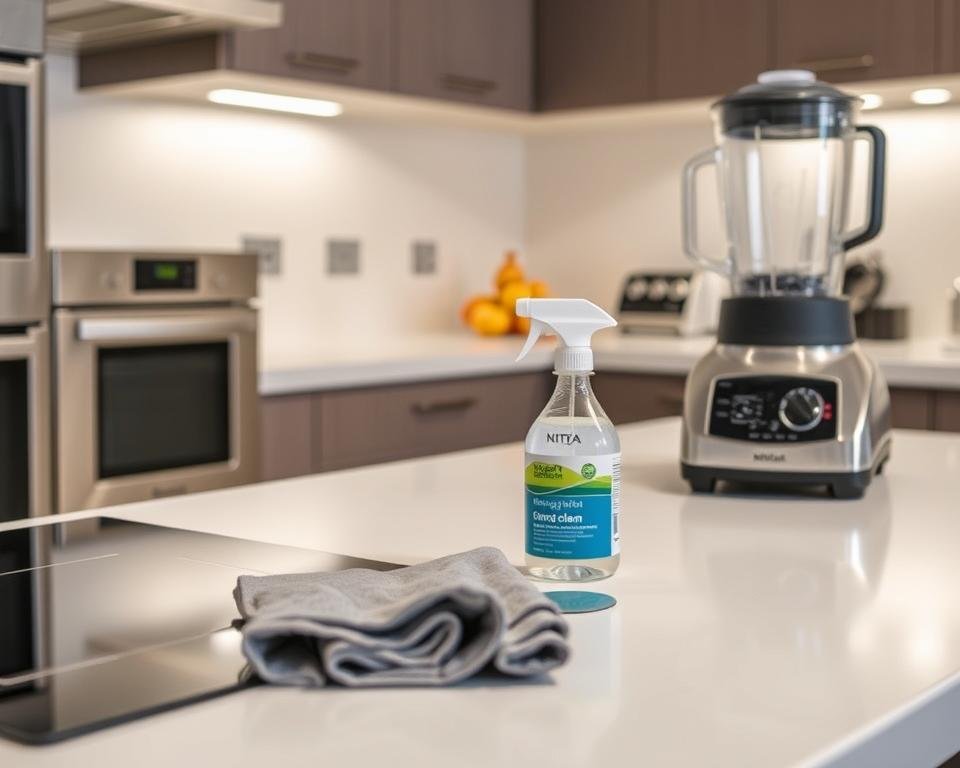
Ever wondered why your kitchen appliances break down more than you’d like? It might be because they’re not cleaned regularly. Cleaning your appliances is key, not just for looks. It also makes them work better, last longer, and save you money on energy.
Ignoring this can lead to big problems. You might face higher repair costs and even health risks. Let’s dive into why your kitchen appliances need extra care.
Keeping kitchen appliances clean is key to meeting tenancy standards. A clean kitchen makes a good impression and shows the property is well-kept. Landlords want appliances to look and work well, as dirty or broken ones can scare off tenants.
Dirty appliances can make a property less appealing. During viewings, landlords often point out the appliances’ condition. They do this because first impressions matter a lot.
Dirty appliances can make tenants question the property’s overall cleanliness. This can affect their decision to rent.
Grease, food residue, and dust in appliances can be a health risk. Bad smells from fridges, ovens, and washing machines are unpleasant. Keeping appliances clean is important for looks and health.
Landlords often complain about dirty appliances, leading to deductions from the deposit. Issues like grease in ovens, mould in dishwashers, and bad smells in fridges are common. These problems can slow down the rental process.
Fixing these cleanliness issues can prevent disputes. It ensures the property meets tenancy standards and improves the renting experience for everyone.
Cleaning kitchen appliances can be tough, mainly because of stubborn stains and residue. It’s key to use the right cleaning methods to keep things hygienic and efficient. Knowing the specific cleaning needs of each appliance makes the job easier.
Ovens and stovetops often get clogged with burnt grease. Cleaning them regularly is a must. Try using gentle cleaners, vinegar, and baking soda to remove tough stains without harming the surfaces.
Using oven liners can cut down on deep cleaning by almost 40%. This makes keeping them clean a bit easier.
Fridges and freezers can smell bad if food spills aren’t cleaned up. A good wipe-down and deodorising can make them work better. A clean fridge or freezer might even use up to 20% less energy.
Regularly checking for expired food and keeping things clean helps stop bad smells. This makes cooking in your kitchen more enjoyable.
Dishwashers can be a breeding ground for bacteria and limescale if not cleaned right. About 60% of dishwashers have bacteria because they’re not cleaned enough. Using a deep cleaner every month can cut down odours by 90%.
These cleaning tips help keep your dishwasher efficient and hygienic.
Washing machines can also be a problem, as they can grow mould and bacteria. Regular upkeep, like cleaning rubber seals and filters, stops moisture and dirt buildup. Keeping up with cleaning can extend your appliance’s life by up to 50%.
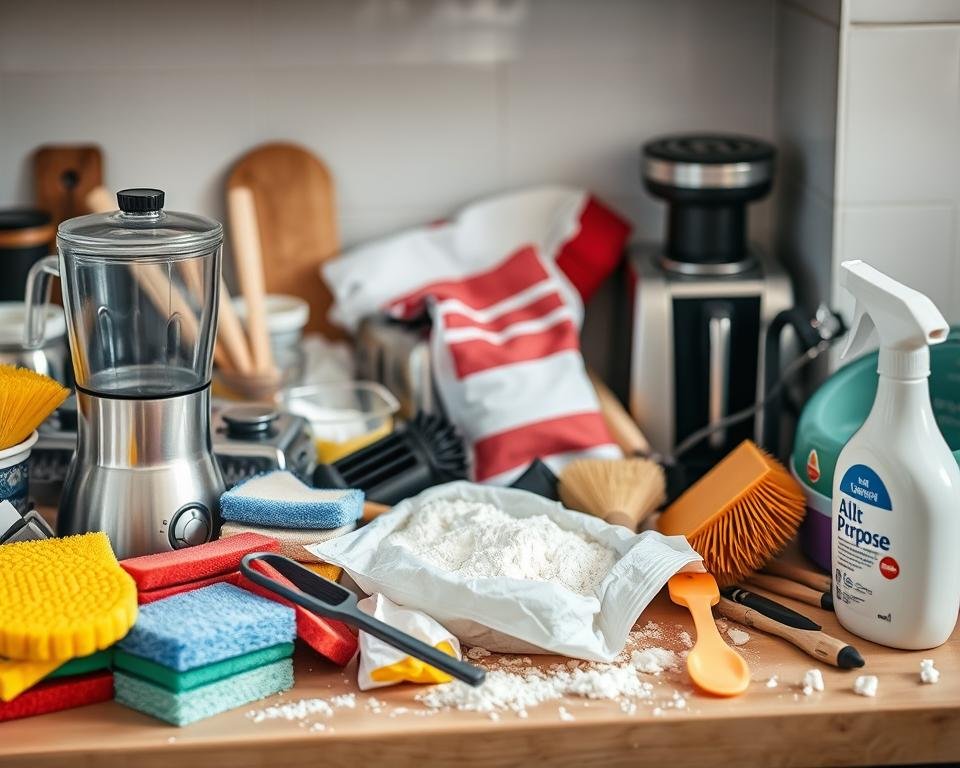
Cleaning kitchen appliances well is key when you move out. It meets your landlord’s standards and helps you get your deposit back. Using the right cleaning products and following guides can avoid disputes. Here’s a detailed guide for cleaning different kitchen appliances.
Choosing the right cleaning products is crucial. Natural items like vinegar and baking soda are great for cleaning. For ovens, a paste made from baking soda and water removes burnt food.
Stainless steel appliances need special cleaners to avoid streaks. For fridges, a simple vinegar scrub keeps them fresh. Always check the product labels to avoid damage.
Removing stains and odours needs care. Use microfiber cloths with vinegar for surfaces that scratch easily. In fridges, baking soda on shelves gets rid of smells.
For dishwashers, vinegar in a cycle breaks down grease and smells. Always clean with care to avoid damage.
Areas hard to reach often get dirty. Use narrow brushes or toothbrushes for ovens and fridges. In dishwashers, clean the filter to avoid clogs.
Always check your appliance’s manual for the best cleaning methods. This ensures you clean everything properly.
Keeping filters clean improves appliance performance. Dishwashers and hood vent filters need regular cleaning. Remove and rinse filters under warm water to keep them working well.
Regular maintenance prevents pests and bad smells. This makes the cleaning process easier at the end of your tenancy.
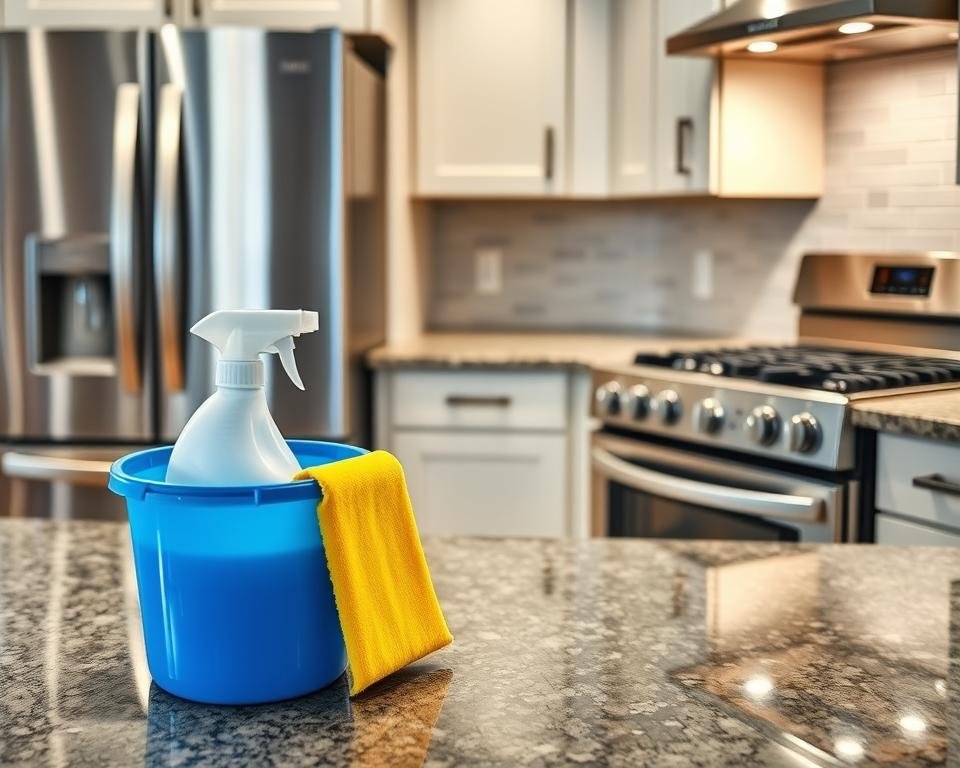
Choosing between professional cleaners and DIY cleaning for kitchen appliances is crucial. Each method has its own benefits and drawbacks. Tenants and homeowners need to weigh these carefully.
Professional cleaners are ideal in certain situations. They are skilled in deep cleaning ovens and fridges, which DIY methods often can’t match. Their expertise ensures appliances are clean and work well.
For example, professional oven cleaning can remove up to 99% of food and grease. This level of cleanliness is hard to achieve with DIY methods.
DIY cleaning is great for everyday upkeep and simple tasks. Using vinegar and baking soda can remove minor stains and odours. These common items can keep kitchens looking good, even in rentals.
But, it’s key to avoid using harsh chemicals and neglecting hard-to-reach spots. These mistakes can harm appliances.
DIY cleaning can lead to mistakes. One big error is not allowing enough time for cleaning. A two-bedroom apartment might need 10 hours to clean properly.
Many DIY cleaners also skip important maintenance checks. This can cause expensive repairs later. About 30% of tenants worry about cleaning before moving out. This worry often leads them to choose professional services.

Keeping kitchen appliances clean is key to their longevity. Regular cleaning and quick spill removal boost their lifespan and hygiene. It’s wise to deep clean fridges and ovens every two to four months, as they collect grease and food fast.
Regular cleaning extends the life of kitchen appliances. A clean fridge can last up to 15% longer, working better during busy times. Cleaning dishwashers and kettles every six months keeps them running well and saves on repairs.
These simple steps make your kitchen cleaner and cooking more fun.
Keeping fridges and freezers clean starts with how you store food. Use airtight containers and label perishables to avoid spills. Proper storage keeps your kitchen clean and safe, reducing the risk of foodborne illnesses.
Preventing grease and residue buildup is crucial for appliance performance. Use splatter guards, clean air fryer and microwave baskets, and watch oven use. These habits cut down on cleaning time and make cooking more enjoyable.
Keeping kitchen appliances clean is key for looks and function. Clean ones work better, use less energy, and cut down on bills. Dirty appliances can also spread harmful germs, harming health.
Dirty or broken appliances can make a property look bad. This can give a negative first impression. Landlords expect appliances to be clean, or they might get complaints.
Dirty appliances can smell bad and be unhealthy. They can cause health problems and make kitchens unsanitary. Issues like food in dishwashers and fridge grime are common.
To clean ovens, use gentle cleaners or try vinegar and baking soda. These methods work well without harming the oven.
To clean a fridge, take out all food and wash shelves with soap and water. For smells, use vinegar and water on surfaces. An open box of baking soda can also help.
Prevent limescale and scum by cleaning your dishwasher regularly. Use special cleaners or vinegar to keep it clean. Also, clean filters often for best results.
To stop mould and bacteria, leave the washing machine door open after use. Clean the rubber seal and drum with vinegar to keep it hygienic.


