
- 05/04/2025
- Category: House Cleaning
- Author: Kris Foster
- 112
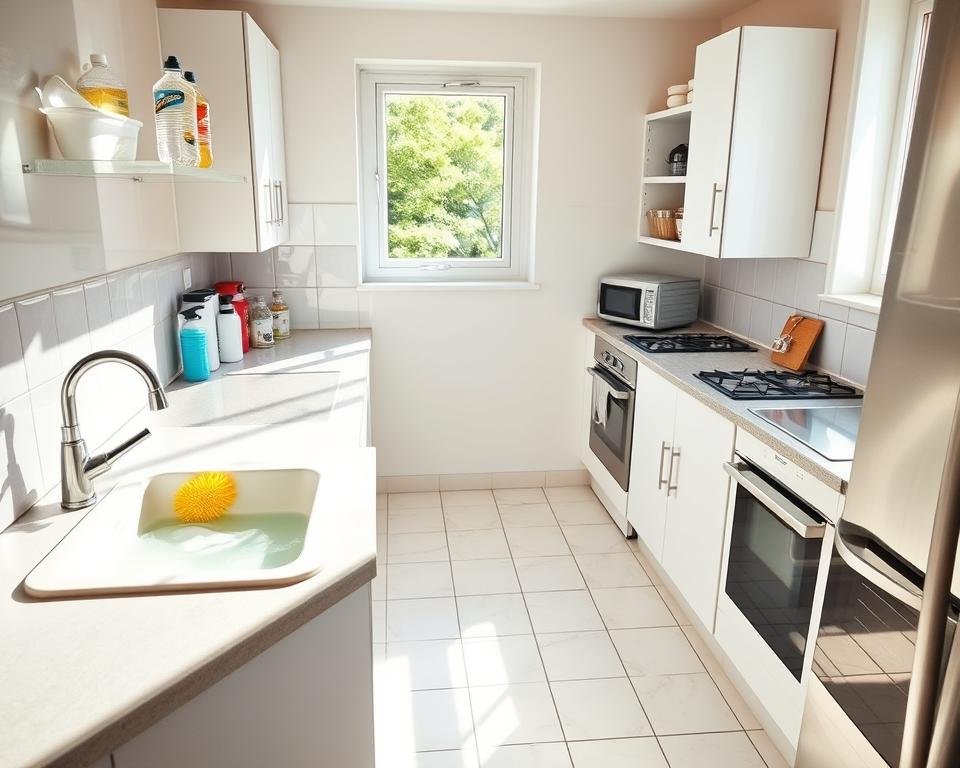
Ever wondered why your deposit wasn’t fully returned? It’s often because of the kitchen cleaning. A detailed cleaning checklist is key to avoid missing spots, like the kitchen. It’s used a lot and has tough stains.
A survey found that 100% of tenants must clean rental properties to get their deposit back. Amazingly, 90% of landlords say a clean kitchen makes a big difference. But, 50% of tenants lose part of their deposit because of poor kitchen cleaning.
Keeping your kitchen clean is key for passing both home and business checks. Kitchens get a lot of use, showing wear and tear easily. This makes them a main focus during checks. Cleaning up grease, burnt food, and spills is essential.
Following kitchen inspection tips and a tenant cleaning guide can really help. This way, you’re more likely to pass inspections with ease.
Kitchens are busy places with lots of spills and food residues. These can cause tough stains and grime, mainly on countertops, ovens, and stovetops. Cleaning these areas well is important to keep the kitchen clean.
Landlords and agents check for neglect in high-risk areas. They look at ovens, fridges, cupboards, and appliances for dirt and grime. They check for grease, dusty cabinets, and neglected spots.
Following clean kitchen deposit tips helps meet these standards. This ensures your kitchen is clean and ready for inspections.
Using a detailed tenant cleaning guide is crucial for getting your deposit back. Cleaning every part of the kitchen well meets inspection standards. It also builds a good relationship with your landlord.
Cleaning every corner, from appliance interiors to cupboard tops, makes sure your kitchen is ready. This helps avoid any deposit deductions.
Cleaning a kitchen can be tough, with stains and residues being a big problem. It’s important for hygiene and to pass inspections. Chefs spend a lot of time cleaning while cooking.
Let’s look at how to tackle grease, burnt residue, and odours.
Grease and oil are hard to remove from kitchen surfaces. They stick to everything, making it hard to clean. Using the right cleaners and natural options can help.
Using a splatter screen on stovetops helps keep them clean. A tidy countertop is also key to avoiding messes.
Wearing gloves when handling raw meat stops cross-contamination. Cleaning up right after cooking helps prevent grease buildup.
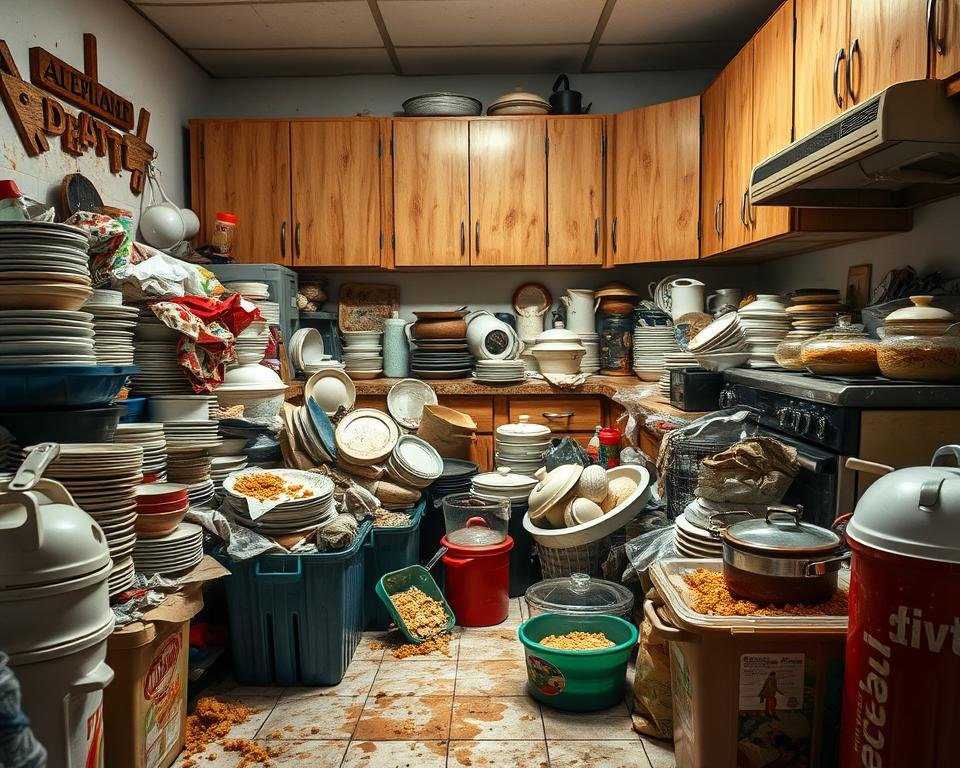
Dealing with burnt residue is a big challenge. It comes from spills left unattended. Cleaning up right away is the best approach.
Using the right cleaners and pre-treating stains helps. Soaking items in hot water and dish soap makes cleaning easier.
Professional kitchens use the 5S principles to improve cleaning. This makes kitchens more efficient and reduces staff stress.
Getting rid of odours is crucial. Fridges, sinks, and drains can smell bad if not cleaned. Thorough cleaning and sanitisation are needed.
Using a garbage bowl helps avoid spills and messes. Pre-treating items keeps the kitchen smelling fresh. Keeping these areas clean is key for inspections.
Implementing “clean as you go” and having places for dirty items makes cleaning easier. This keeps the kitchen smelling good and ready for inspections.
Getting your kitchen ready for an end-of-tenancy inspection can seem tough. But, with a clear plan, you can do it well. Keeping up with daily and weekly cleaning makes a big difference. Here’s a detailed guide to help you clean every part of your kitchen.
Start by taking everything off your countertops and cupboards. Use a damp cloth and the right cleaner to wipe them down. This removes crumbs and stains. Focus on areas that get touched a lot, as they can spread germs, more so during cold and flu season.
Regular cleaning keeps your kitchen tidy. It also means you won’t have to do as much cleaning later.
These appliances get dirty with grease and food over time. You’ll need to clean them well. Use a strong oven cleaner for burnt bits, and clean the hob and extractor fan too. Cleaning them regularly stops grease from building up, which is dangerous.
Also, clean exhaust hoods and vents. This keeps air flowing well and lowers fire risks.
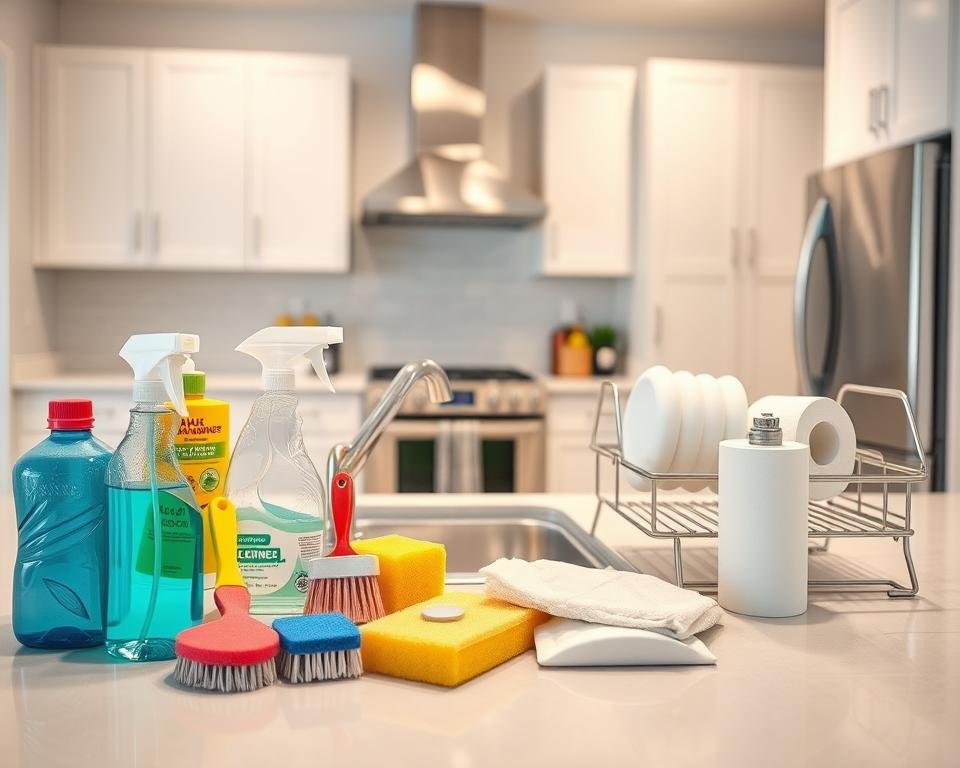
Cleaning your kitchen sink right is key because it’s a place where bacteria can grow. Use a sanitiser to clean the sink and drains. This gets rid of harmful bacteria and bad smells. Changing your sink sponges often helps keep germs away too.
To clean appliances well, wipe down all surfaces inside and out. For fridges, keep them at 40°F or below. Freezers should be at 0°F or below to avoid food sickness. Cleaning and disinfecting often, like door handles, is important for food safety.
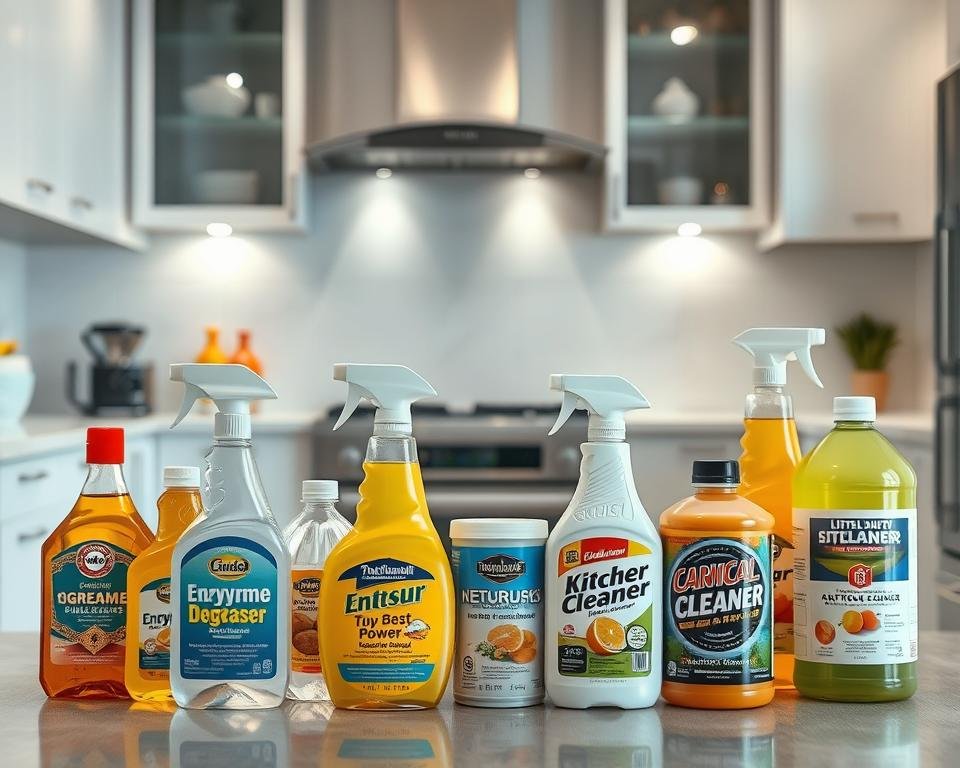
Choosing the right cleaning products is key for a clean kitchen. Kitchens have many surfaces like stainless steel, glass, and marble. Having a variety of cleaning items helps tackle these surfaces well.
Removing fats and oils is crucial. The best kitchen degreasers are vital for this task. The Oven Mate Complete Deep Clean Oven Kit is top-notch for removing burnt-on food.
For those who prefer natural cleaning products, white vinegar and baking soda are great. Baking soda is amazing for deodorising and removing stains.
Steam cleaning is a strong method for tough grime. It’s perfect for kitchen sanitization before an inspection. It sanitises and removes dirt, leaving surfaces clean.
Microfiber cloths and scrub brushes are essential. They help clean hard-to-reach areas. Using these tools ensures a detailed and thorough clean.
When cleaning your kitchen for an end-of-tenancy check, it’s key to steer clear of common errors. Many people forget to clean hidden spots like the backsplash and cabinet tops. These areas can collect grease and dust, which are often overlooked but noticed by inspectors. Making sure these areas are as clean as the rest is vital for passing the inspection.
It’s easy to miss the backsplash and cabinet tops when cleaning. These spots can build up grease and dust, becoming breeding grounds for bacteria. A mix of baking soda and vinegar can clean these areas well, stopping build-up and bad smells. Ignoring these spots could risk your deposit during an inspection.
It’s important to use the right cleaners for different surfaces to keep your kitchen looking good and clean. Using the wrong products on stainless steel and glass can cause damage. For example, vinegar is too acidic for some surfaces. When cleaning stainless steel, use products made for it to avoid scratches and colour changes. Clorox Disinfecting Bleach-Free Cleaning Wipes are good for general cleaning, killing 99.9% of germs and viruses.
Cleaning isn’t just about the surfaces you can see. Areas under appliances and inside drawers are often missed but checked by inspectors. Taking out appliances like microwaves and toasters to clean under them can get rid of hidden crumbs and grease. Also, clean the inside of drawers to remove any dirt. Regularly changing sponges and using the right disinfectants helps keep these areas clean and ready for inspections.


