
- 07/10/2025
- Category: Expert Tips
- Author: Kristian Yordanov
- 58
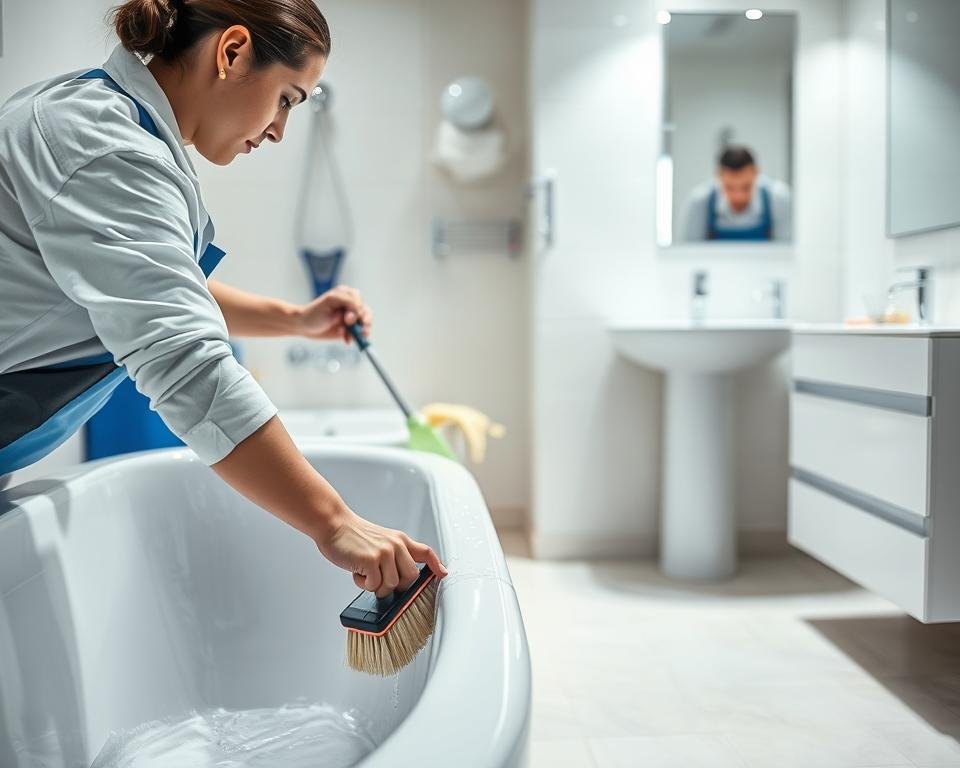
Ever pondered how a bathroom, often overlooked, can be transformed into a gleaming space for the final tenancy inspection? The cleaning of bathrooms during end of tenancy cleaning is more than just a task; it’s crucial for securing your deposit back. Professional cleaning services employ advanced methods to overcome both typical and unique cleaning hurdles. They ensure the space meets hygiene standards, making it inviting for the next tenant. This piece explores the detailed steps professional cleaners take to make bathrooms not just clean, but spotless.
Limescale can accumulate over time on various bathroom fixtures, dulling their appearance. Effective removal is crucial for maintaining both the look and function of taps, showerheads, and screens. Professional cleaners use specific descaling methods to remove limescale without damaging the fixtures.
Descaling methods like soaking fixtures in vinegar or using commercial limescale removers are effective. These solutions help dissolve limescale, restoring the shine of bathroom fixtures. For shower screens, scrubbing with non-abrasive sponges and targeted cleaners improves transparency, making them look new again.
After descaling, polishing chrome and stainless steel surfaces is the next step. Using gentle microfiber cloths and appropriate polishing agents creates a brilliant shine. This not only enhances the bathroom’s appearance but also protects the fixtures from future limescale buildup.
Maintaining high standards of toilet sanitisation is crucial for hygiene and comfort. Deep cleaning toilets requires thorough strategies to remove germs and unsightly stains. Professional cleaning services use specific techniques to achieve a pristine toilet environment, focusing on both interior and exterior.
The sanitisation process starts with the toilet bowl, where a robust disinfectant is applied. It is allowed to dwell for maximum effect. This step is vital for killing harmful bacteria. Scrubbing the toilet bowl with a firm bristle brush helps eliminate tough stains, notably those from hard water.
The toilet seat and flush handles, being high-touch areas, receive equal attention during deep cleaning. Cleaning these parts with antibacterial wipes ensures they are germ-free, preventing the spread of disease.
Hard water stains can be a persistent issue in many households, requiring effective removal strategies. A mixture of vinegar and baking soda can dissolve these stubborn stains. This solution not only tackles hard water residues but also aids in odour removal.
For stronger odours, specific toilet cleaners designed for persistent smells may be used. These products often contain enzymes that neutralise odours, leaving the space smelling fresh.
Regular cleaning of showers and bathtubs is vital for maintaining hygiene and aesthetics in bathrooms. Soap scum and mould build-up not only looks bad but also poses health risks. Proper cleaning regimes extend the life of these essential fixtures.
Effective soap scum and mould removal requires specialised bathroom cleaners. These products break down grime and eliminate organic build-ups. Soft to medium brushes are best for scrubbing, ensuring all residue is removed. Anti-mould solutions effectively target and remove mould, creating a cleaner, safer space.
Cleaning tiles and glass enclosures needs specific glass cleaners or vinegar solutions. A thorough wipe-down improves their appearance and contributes to sanitation. Regular maintenance prevents mould growth and makes future cleaning easier.
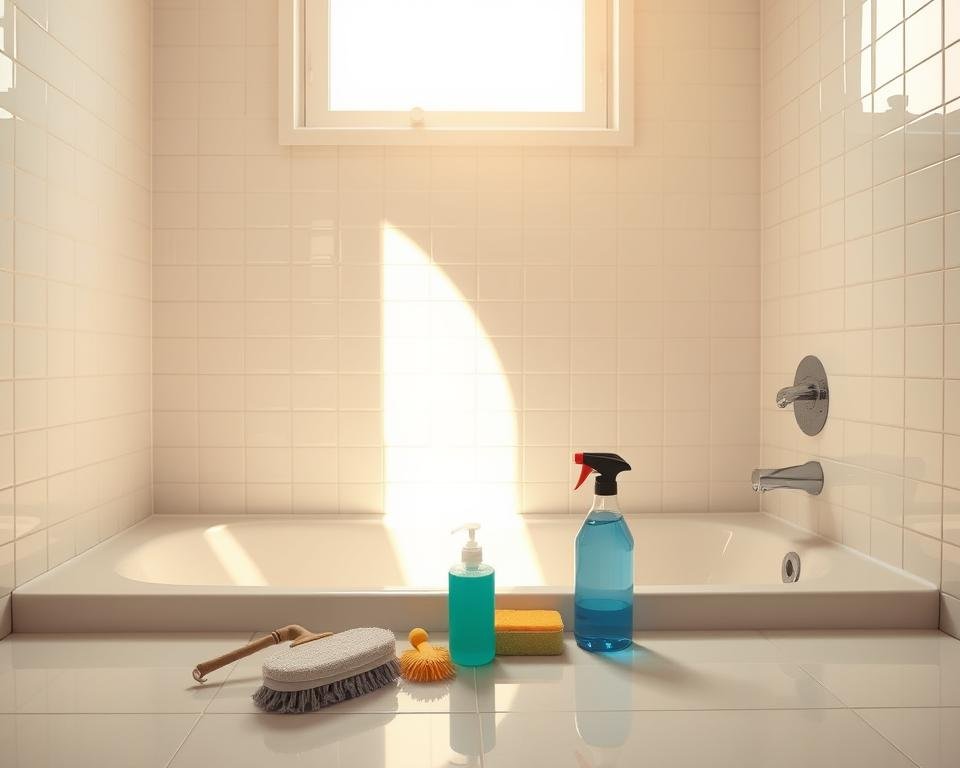
Maintaining walls and tiles in a bathroom is crucial for a clean and inviting space. Grout cleaning is key to keeping surfaces free from mildew, which can spoil the look. Experts focus on removing mildew effectively, restoring grout’s beauty and extending its life.
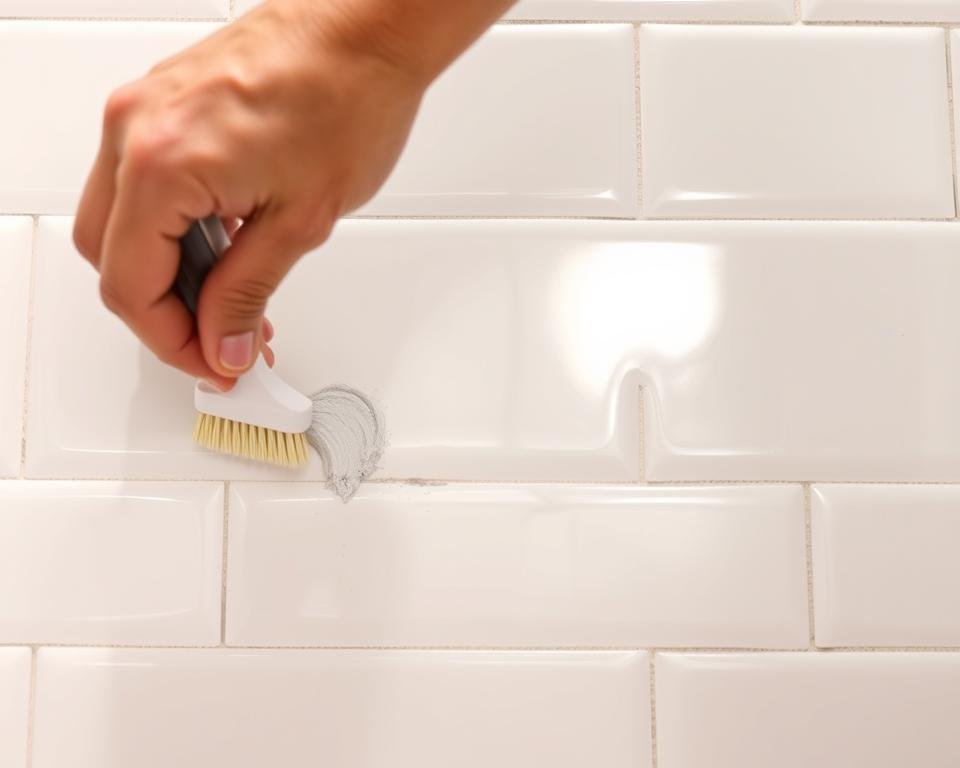
Grout can discolour over time, becoming a mildew hotspot. Professionals use strong yet gentle cleaners to scrub grout lines. This method removes tough mildew and brings back the grout’s original shine. Regular cleaning keeps your tiled walls looking good and hygienic.
Maintaining tiled walls requires cleaners that restore shine without harm. Splash zone cleaning is essential in areas where water stains and dirt tend to gather. Keeping these areas clean prevents grime build-up, making your bathroom more pleasant and clean.
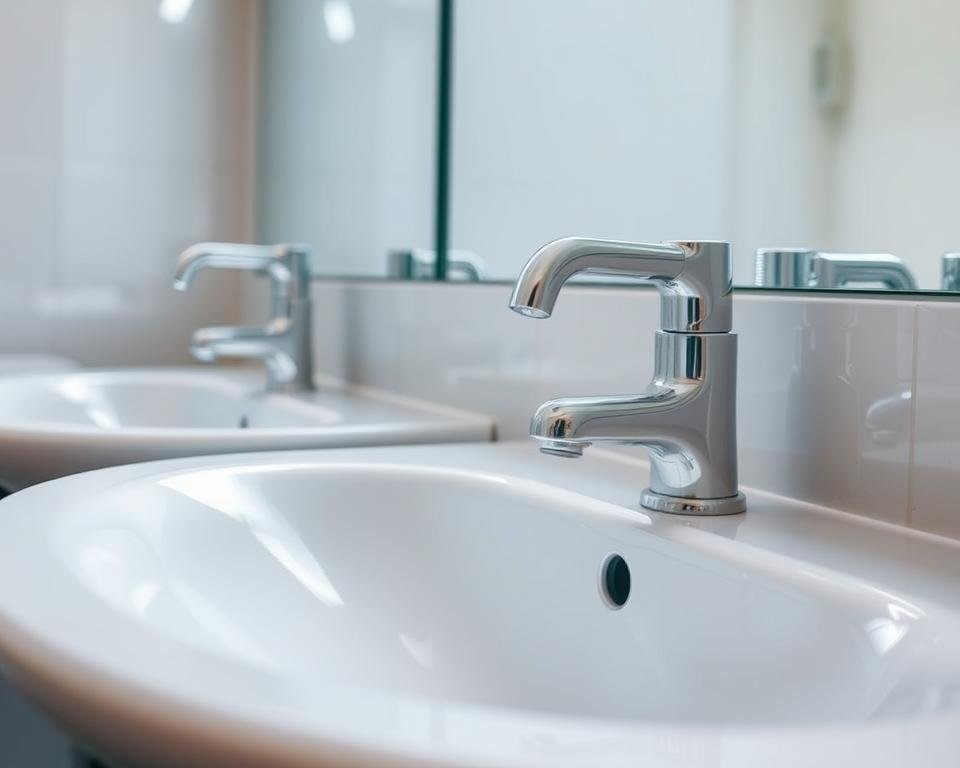
Attaining excellence in sink cleaning and mirror polishing demands the right techniques and products. Paying close attention to these details can transform your bathroom into a polished and welcoming space.
To achieve a flawless mirror, use a vinegar-water solution or a dedicated glass cleaner. These solutions effectively break down grime and enhance the mirror’s shine. When wiping, opt for lint-free cloths or squeegees to avoid streaks. This ensures your mirror shines with a streak-free finish.
Effective sink cleaning requires scrubbing both the basin and the plughole areas. These spots often harbour soap residue and dirt. Using a quality cleaner can tackle tough grime and maintain hygiene. Regular maintenance of the plughole prevents blockages, enhancing the bathroom’s elegance.
Maintaining cleanliness in bathrooms requires a systematic approach to floor and ventilation cleaning. Disinfecting floors is crucial for eliminating germs and ensuring a hygienic space. This task often employs industrial-grade equipment for deep-cleaning, ensuring all dirt and bacteria are removed.
Mopping floors with disinfectants is a key step in effective cleaning. It sanitises surfaces and protects residents from health risks. Regular mopping removes daily residue, leaving the area sanitised and fresh.
Extractor fan maintenance is vital for air quality, yet often overlooked. Routine dusting and cleaning prevent dust and grease build-up. Clearing these elements ensures the fans work efficiently, promoting better ventilation and a healthier environment.
After a thorough clean, the final touches are key to making a bathroom welcoming. Ensuring air freshness is vital, and airing it out effectively removes moisture. This step is crucial to make the space feel as fresh as it looks.
Allowing fresh air to circulate boosts hygiene levels in the bathroom. This practice promotes moisture removal, creating a drier space. It discourages unhealthy bacteria and mould. Professional cleaning services often recommend this step to enhance overall cleanliness.
Deodorising bathrooms with subtle, natural air fresheners also improves the atmosphere. The goal is to leave behind neutral scents that suggest cleanliness and comfort. This final step highlights the thorough cleaning efforts, ensuring the bathroom is not just visually appealing but also fragrant for new users.


