
- 10/10/2025
- Category: Expert Tips
- Author: Kristian Yordanov
- 61
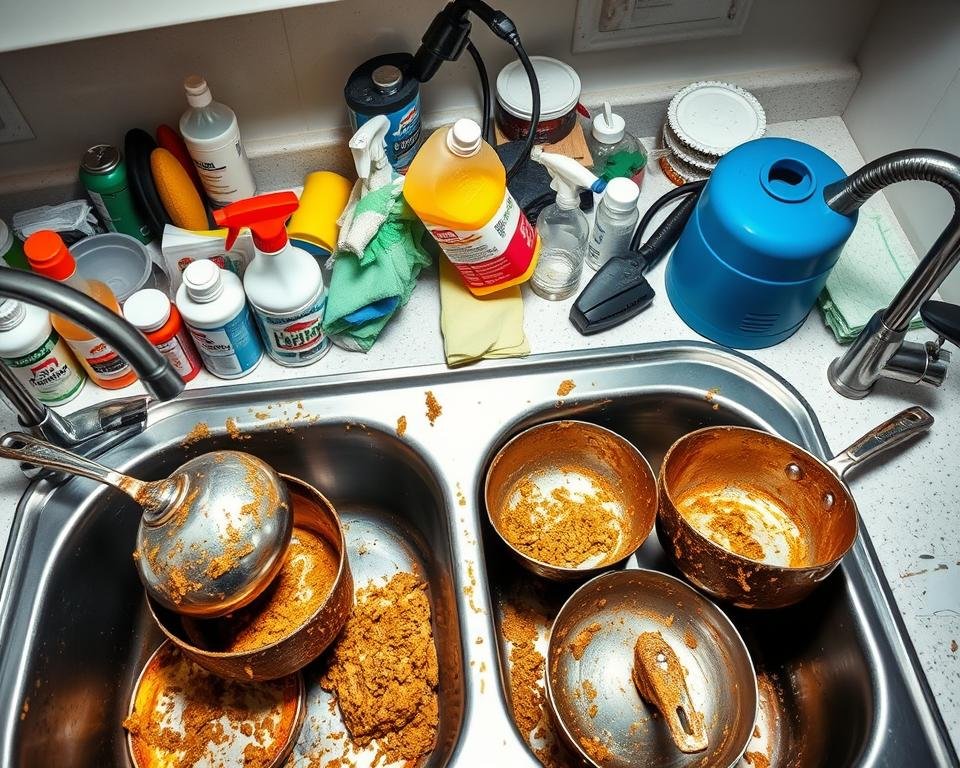
Ever wondered why some tenants don’t get their full security deposit back? Grease removal is a big problem in cleaning rental properties. About 60% of tenants lose some of their deposit because of poor cleaning, mainly in kitchens.
Landlords say a clean property is key to getting new tenants. But grease can be hard to remove, leading to disputes over deposits. It’s not just about cleanliness; it’s also about avoiding bad smells and mould that scare off new renters.
Dealing with grease can be tough, and knowing what your lease says is important. This article will look at the grease removal challenge, where grease comes from, and how to clean effectively. It’s for both tenants and landlords to ensure a clean property.
Grease buildup is a big problem in rental homes, mainly because of how fast life moves for tenants. It makes kitchens look dirty and is hard to clean. Knowing where grease comes from and how it affects surfaces is key to keeping properties in good shape.
The kitchen is where grease problems start. Mainly, it’s because of:
These things mix together, making kitchens in rental homes sticky. This mess affects cabinets, windowsills, and even ceilings, making cleaning hard for tenants.
Ignoring grease buildup can cause big problems. It doesn’t just look bad; it can also make things not work right. For example, greasy appliances might not work well or could be dangerous.
Also, grease can mess up ventilation systems. This makes the air in the property bad. Cleaning kitchens well is important to avoid these issues.
Removing grease from various surfaces is a big challenge. Kitchens, with their ovens, stovetops, and backsplashes, get greasy fast. This makes cleaning tough for tenants.
Old cleaning methods can damage surfaces. They often use harsh scrubbing. This can harm finishes and materials.
Oven cleaning is tricky because of the layers and parts inside. Stovetops need careful cleaning to avoid scratches. Backsplashes also get greasy, needing special cleaners.
Using the right degreasers helps a lot. They make cleaning more effective and protect surfaces.
Grease stains on walls, cabinets, and floors are hard to clean. They ruin the look of rental properties. They also show poor maintenance.
Grease can soak into materials, making marks hard to remove. Each surface needs its own cleaner to avoid damage. Neglecting grease cleaning leads to big cleaning jobs later. It shows why regular maintenance is key.
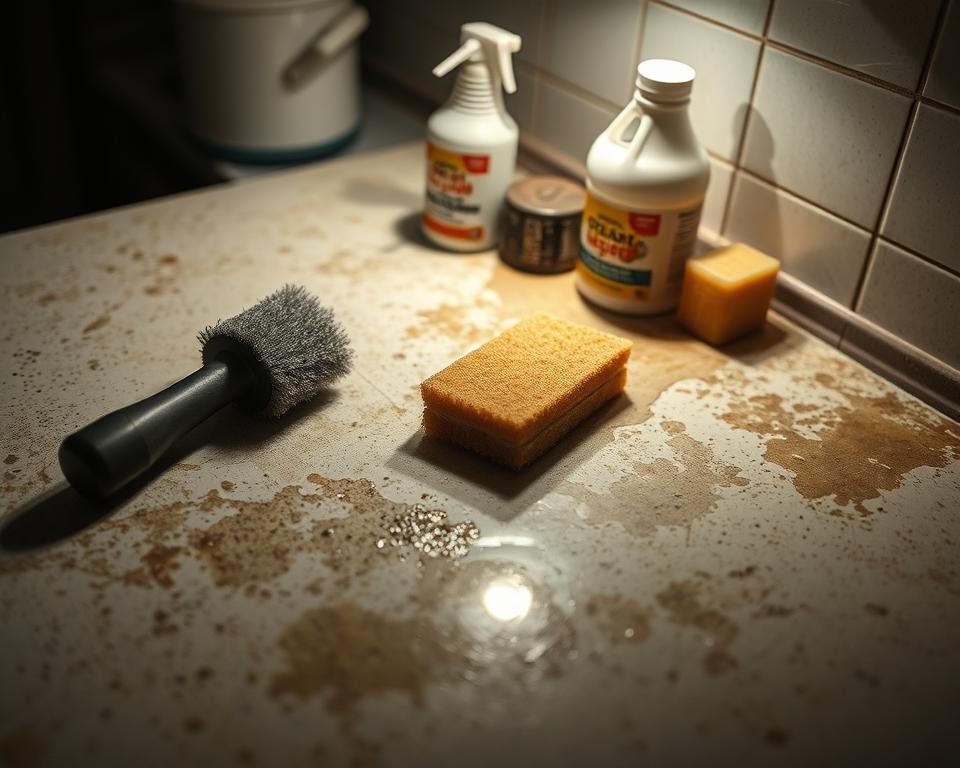
Many tenants try DIY cleaning for grease in their kitchens. But, this method often doesn’t work well. Mistakes happen because they don’t know the right techniques or cleaning chemicals. Knowing how to use these tools is key to removing grease effectively.
There are several reasons why DIY grease removal fails. Tenants often forget to:
Using strong cleaning chemicals seems appealing. But, using them wrong can cause problems. For example, scrubbing too hard without the right lubricant can make stains worse or damage surfaces.
It’s better to use safer, gentler DIY cleaning methods. These use natural ingredients and are kinder to surfaces. To get the best results, using the right techniques and products is crucial in fighting kitchen grease.
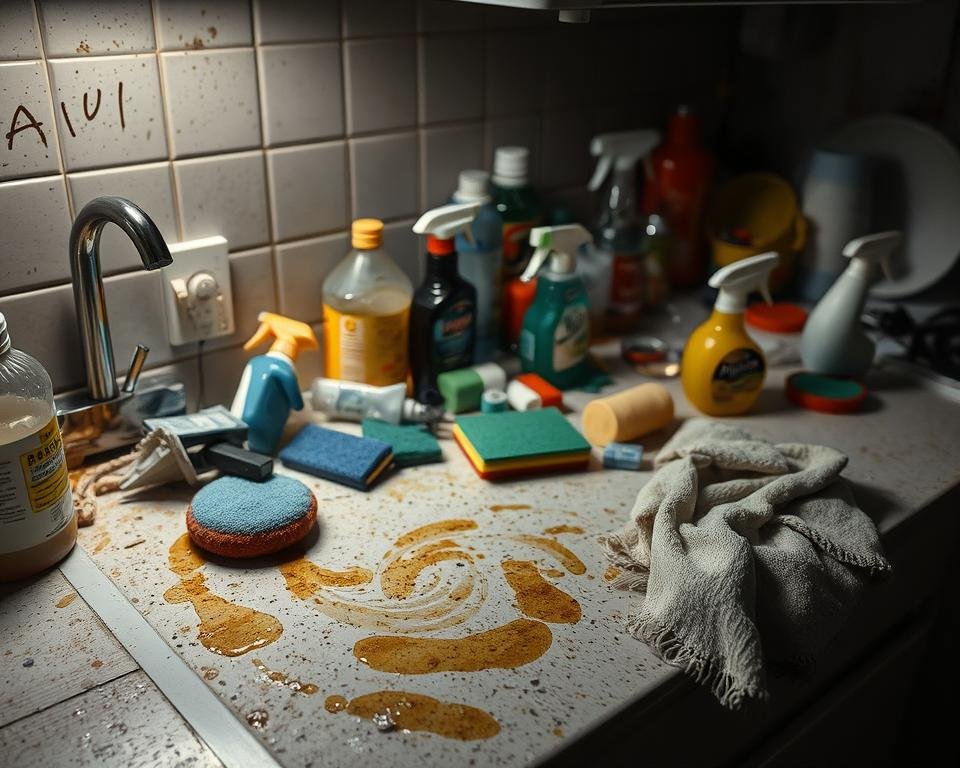
Professional cleaners have the skills and tools needed to remove grease from rental properties. They can handle even the toughest grease stains. This often helps avoid disputes between tenants and landlords.
They use the best degreasers and cleaning methods for a deep clean. This ensures the property is spotless for the next tenant.
Top-quality degreasers and cleaning agents are used by professionals. These products are much stronger than what you find at home. They tackle the deep grime in kitchens and appliances.
These agents make grease removal quick and easy. They also protect the surfaces, keeping them in great shape for the next tenant.
Steam cleaning is a key tool for grease removal. The steam’s high temperature breaks down grease, making it simple to remove. This method is perfect for stovetops and ovens, where grease is hard to get rid of.
Along with steam cleaning, professionals use other advanced techniques. High-pressure washing is used for outdoor surfaces. This ensures every area is cleaned thoroughly.
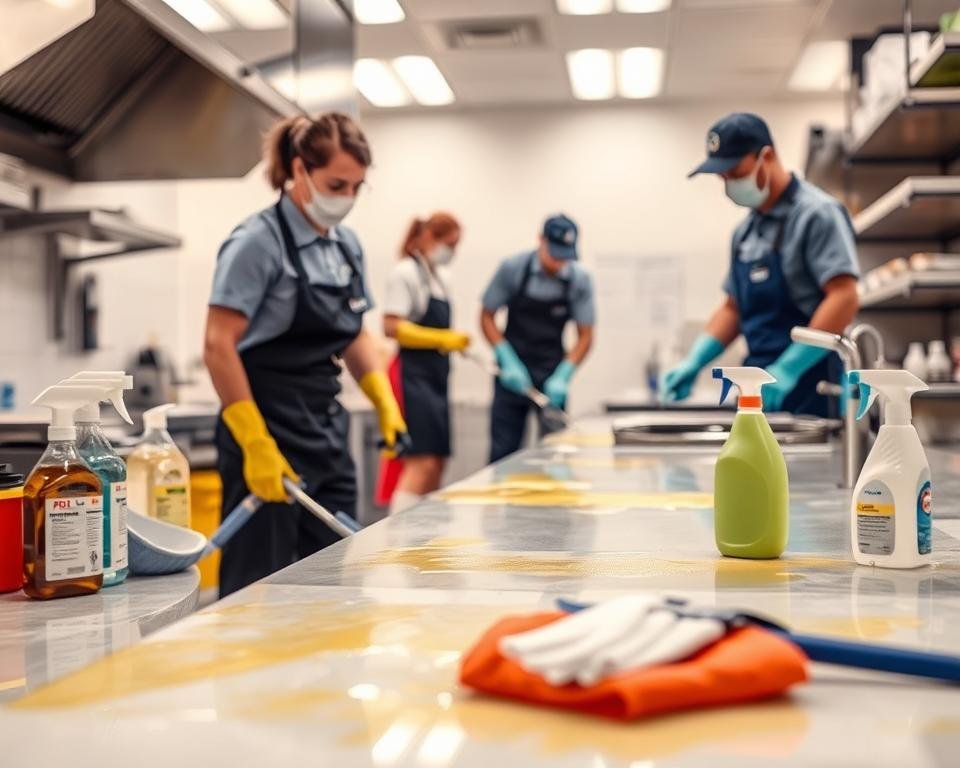
Keeping rental properties clean is key. Simple habits by tenants can stop grease buildup in kitchens. This makes cleaning easier later on. Small changes in daily life, with landlord help, can keep kitchens clean and hygienic.
Regular cleaning is vital to stop grease buildup. Tenants should clean spills right away and wipe down cooking surfaces after use. Cleaning kitchen walls monthly is good, but those who cook with oils often should do it bi-weekly.
Using a splatter guard while frying helps keep walls clean. Good ventilation, like opening windows and using air purifiers, also keeps the kitchen fresh.
Landlords can help by giving tenants the right cleaning tools and tips. Regular checks can spot grease buildup early. This lets landlords act fast.
Teaching tenants how to dispose of grease properly helps too. Using heat-resistant containers and drain strainers can prevent clogs. These steps make living spaces healthier and easier to clean at the end of tenancies.


