
- 29/03/2025
- Category: Green Spaces Maintenance
- Author: Kris Foster
- 122
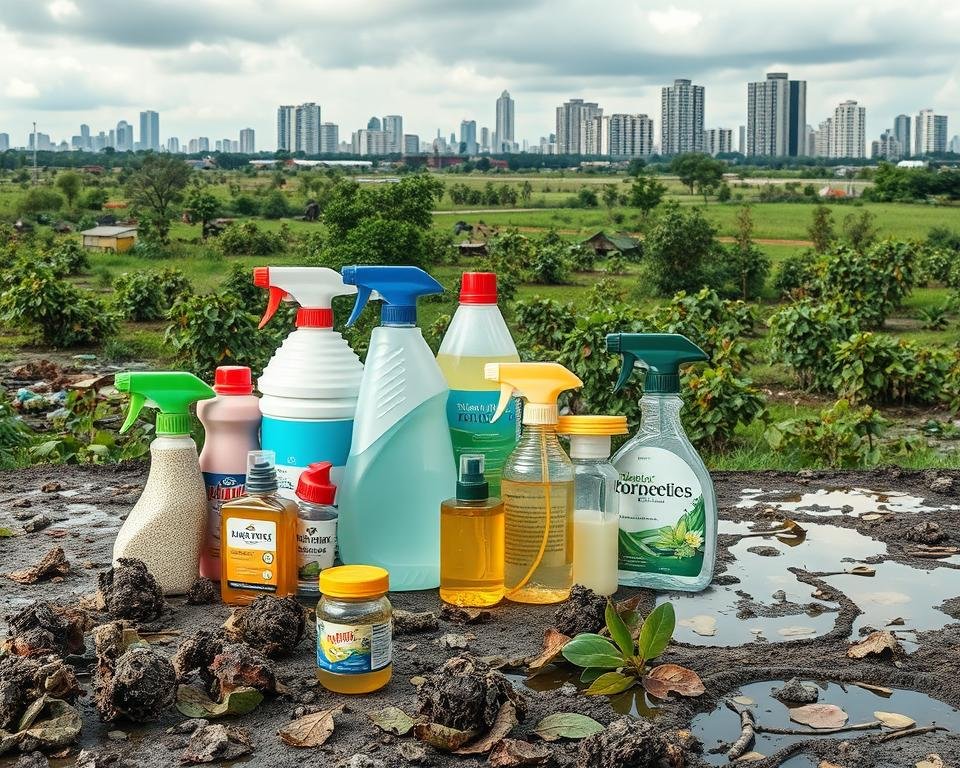
Have you thought about the hidden costs of cleaning products? They might make your home smell fresh and safe. But, their real impact on our health and the planet is often ignored. Traditional cleaning products, full of harmful cleaning chemicals, pollute the air inside, create lots of plastic waste, and harm water life.
As we learn more about our impact on the planet, it’s key to see the real cost of these products. They can harm our health and pollute the environment. Choosing eco-friendly options could help us clean up our act and make our world healthier.
Conventional cleaning products harm the environment a lot. They pollute water and create plastic waste. When thrown down drains, they release harsh chemicals into waterways.
This harms the water and the life in it. Over 400,000 people get hurt every year from these chemicals. It shows they are a big health risk too.
Water pollution comes from things like phosphate and ammonia. These cause algal blooms, which lower oxygen in water. This is bad for sea life.
A study in Norway found using these cleaners is like smoking 20 cigarettes a day. This harms over 1,000 sea species. It’s because chemicals leak into oceans and rivers.
Another problem is plastic waste from packaging. This plastic lasts for hundreds of years. It blocks waterways and pollutes the environment.
Choosing eco-friendly products helps. They come in recyclable packaging. Using natural cleaners like vinegar and baking soda is better. It doesn’t harm the environment like harsh chemicals do. Learn more about making these cleaners here.
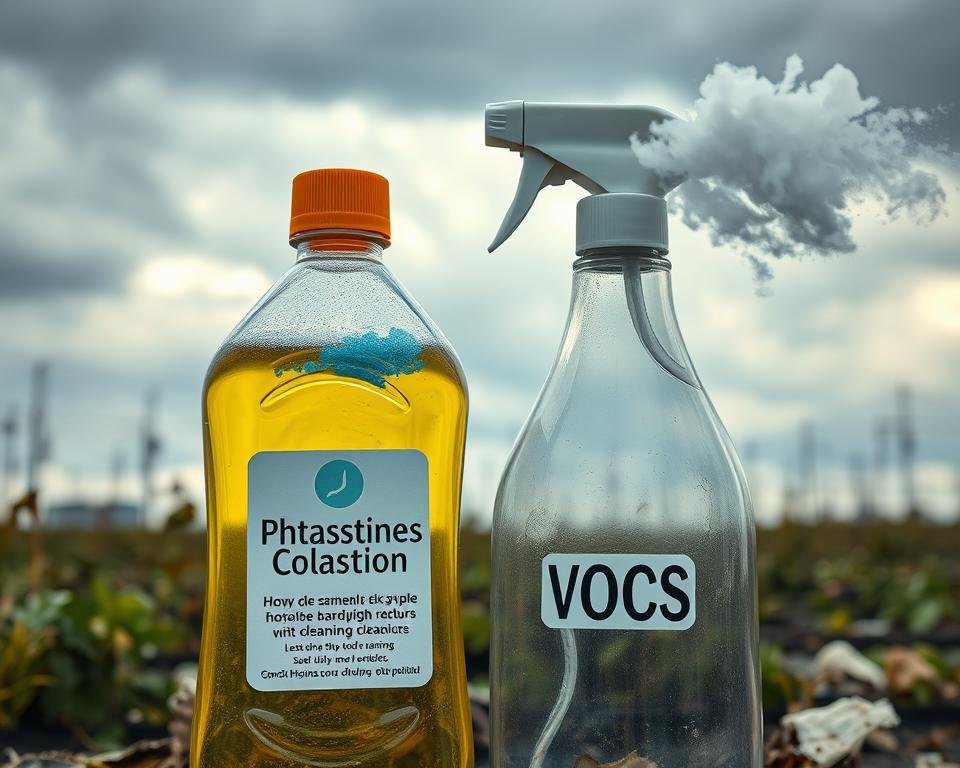
Traditional cleaning products often have harmful ingredients. These ingredients can harm the environment and human health. Knowing about phosphates and VOCs helps us make better cleaning choices.
Phosphates are in many cleaning products. They can harm water bodies. They cause too much algae growth, leading to less oxygen for fish and other sea creatures.
This can kill many sea animals. It changes the balance of the ecosystem.
VOCs are in many products, including cleaners. They can make indoor air very bad. This can cause breathing problems, allergies, and headaches.
Long-term exposure can lead to serious health issues. Even “green” products can have harmful VOCs. It’s important to use these products in well-ventilated areas.
Traditional cleaning products harm the environment a lot. This is because they have a big carbon footprint. Making these products needs a lot of energy, which leads to more greenhouse gases.
Old cleaning products are made in ways that use a lot of energy. For example, using concentrated chemicals instead of ready-made ones saves a lot of energy. The ECO Kentucky Bucket shows this, saving a lot of energy and cutting down CO2 emissions.
Using energy-saving machines, like the Numatic ECO Vacuum ERP180, also helps. It cuts energy use by 30%, which is good for the planet.
How we move cleaning products around also affects the environment. Moving heavy, chemical-filled products around makes a lot of emissions. Using microfibre cloths and buying concentrated chemicals can help reduce these emissions.
Choosing cleaning gear made from recycled materials is also smart. It cuts down on the need for new plastic and reduces transport needs.
To be more sustainable, we need to think about the whole life of our cleaning products. Using eco-friendly methods and biodegradable packaging can really help. This way, we can lessen the harm caused by traditional cleaning.
For more ways to clean without harming the planet, check out this resource.
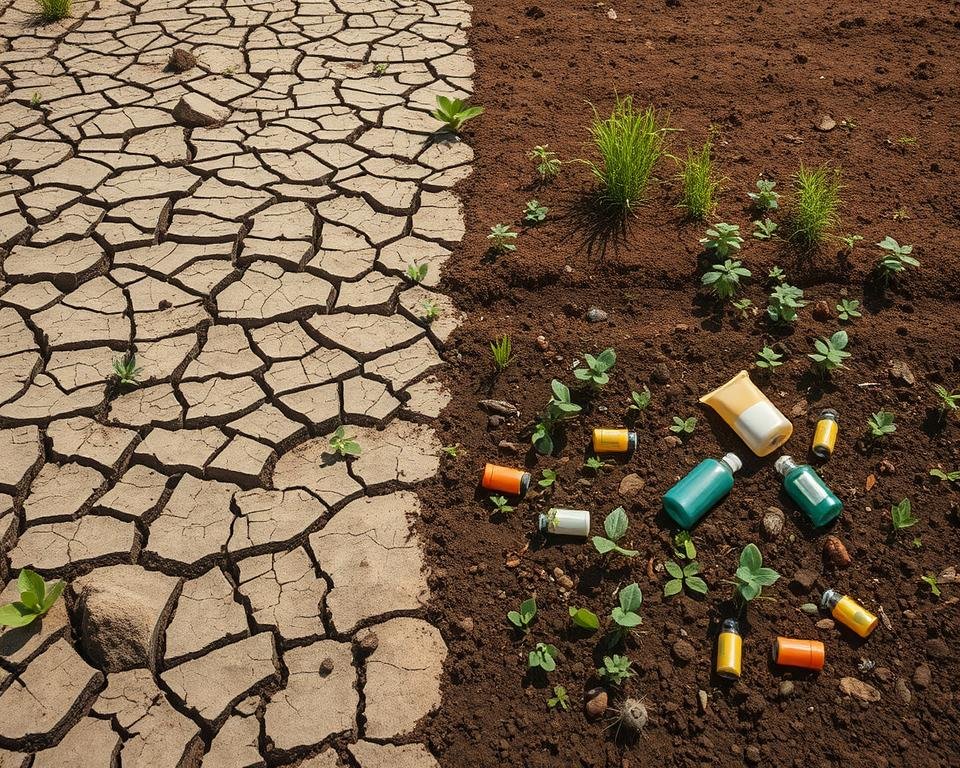
Traditional cleaning products have big effects that last a long time. They harm the soil and the land around us. These chemicals can make the soil less good for plants and hurt the environment.
This can make it hard to grow food and upset the balance of nature. It’s very important to think about these long-term effects.
Cleaning products with harsh chemicals, like bleach, can really hurt the soil. They make it hard for plants to grow. This is bad for farms and for animals and plants living in the wild.
Soil that’s not healthy can’t support life as well. This makes it hard for plants and animals to survive.
Wildlife also suffers from harmful cleaning products. Chemicals like butoxyethanol can harm animals and change their behaviour. This can lead to fewer animals in nature.
When some animals disappear, it upsets the balance of nature. We need to find better ways to clean. Eco-friendly products are safer for us and the planet. For natural stain removers, check out this resource.
More people now know about the harm of regular cleaning products. They are choosing safer options. These green cleaners help keep homes clean without harming the planet.
Many families are picking natural cleaning products. Ingredients like bicarbonate soda, white vinegar, and lemons clean well. They don’t have the bad stuff in regular cleaners.
Here are some easy green cleaning recipes:
Choosing products with green certifications is smart. They meet high environmental standards. These labels help us pick cleaners that are good for the planet.
Landlords can make their properties more valuable with green cleaning. A clean home can raise its value by up to 5%. It also attracts better tenants or buyers. For more info, visit this link.
Switching to green cleaning is good for our planet and our health. It cuts down on harmful chemicals and pollution. It makes our homes and workplaces cleaner and safer.
Choosing biodegradable cleaners helps our waterways and soil. Products with the EU Ecolabel use less water and energy but work well.
Using steam cleaning and microfiber tech boosts green cleaning. Steam cleaning is kinder to allergies and kills germs. It doesn’t need harsh chemicals.
Using concentrated cleaners cuts down on waste and emissions. Eco-friendly tools help the planet and save money. They also make your brand look good to customers who care about the planet.
Use reusable cloths and products with green labels. Dosing systems save chemicals and keep staff safe. Low-temperature laundry saves water and energy.
Small changes in cleaning can make a big difference. They help the environment and support green products, which are growing fast.


