
- 05/04/2025
- Category: House Cleaning
- Author: Kris Foster
- 115
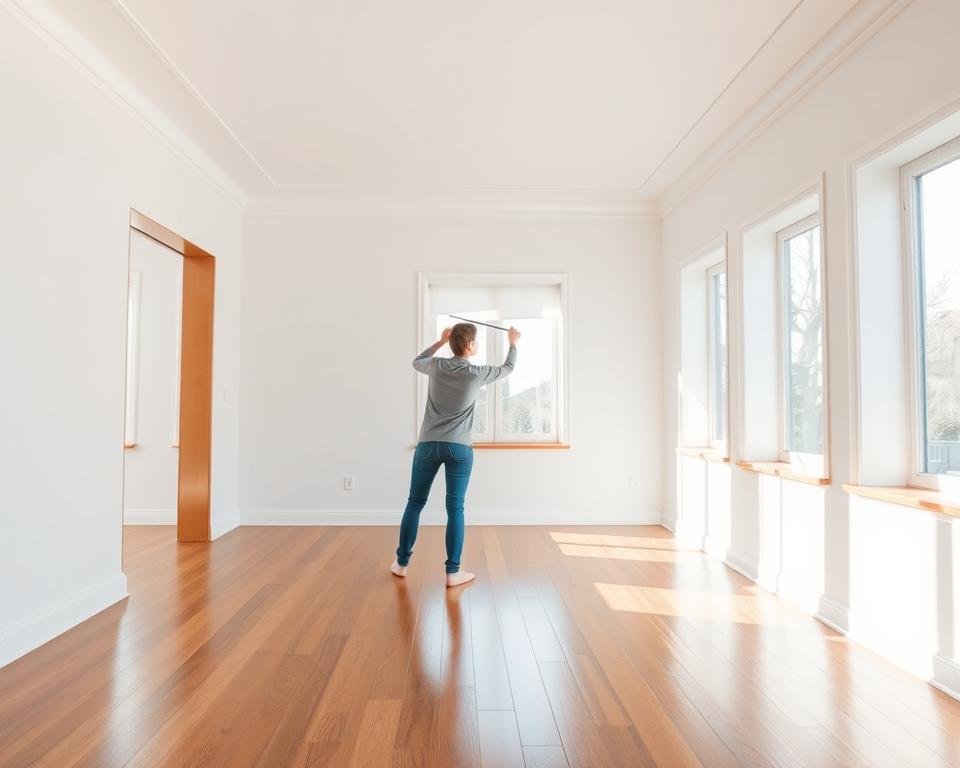
Have you ever thought about how a thin layer of dust could risk losing your deposit? In tenancy cleaning, dusting every surface is key. It can make or break your chances of getting your deposit back without trouble. When tenants leave, they must return the place to its original state. This means dusting often-forgotten spots like skirting boards, light fixtures, and shelves.
The Tenant Fees Act 2019 stopped landlords from demanding professional cleaning. Yet, tenants still need to keep the place spotless to avoid losing money. In fact, over half of disputes at the Tenancy Deposit Scheme (TDS) are about cleaning. If a property isn’t cleaned well, landlords might take up to 100% of the deposit. So, knowing how to dust effectively is vital for a smooth exit from your rental.
Dusting is key to keeping rental properties clean. It ensures they meet the standards of landlords and letting agents. Dust can harm indoor air quality and health over time. It’s crucial to know where dust builds up to keep homes healthy.
Daily life adds to dust in rental homes. Foot traffic, fabric shedding, and pets all contribute. Furniture and appliances trap dust, making cleaning hard.
Without regular cleaning, these areas become dust traps. They affect the look and health of the space.
Dust is more than a cosmetic issue. It can harm indoor air quality and health. It carries allergens and irritants that can cause breathing problems, worse for those with allergies or asthma.
Regular dusting is vital. It keeps the space clean and healthy for everyone.
Some areas often missed during cleaning include:
A detailed cleaning checklist can help find these spots. It reduces disputes and increases the chance of getting the security deposit back.
Dusting rental properties is a tough job that needs careful attention and smart strategies. It’s all about tackling high ceilings, delicate surfaces, and more. Knowing these challenges helps keep your rental property clean and well-maintained.
Areas high up collect a lot of dust. Cleaning ceilings and high shelves can be a real challenge. Using extendable dusters and step ladders makes it easier to reach these spots. Regular cleaning stops dust from building up, saving you from a big clean-up later.
Cleaning delicate items like antiques and electronics needs care. You must use the right tools and be gentle to avoid damage. Microfiber cloths are great for dusting these items without scratching them.
Dust on electrical items can cause problems like reduced performance and malfunctions. Keeping them clean helps them last longer and work better. Make sure to dust them regularly to keep them in top shape.
Stopping dust from coming back is key to keeping things clean. Using microfiber cloths during cleaning helps a lot. Also, good air flow in your property helps keep it dust-free, making cleaning easier.

Dusting is key to leaving a rental property spotless. Using the right tools for each surface makes cleaning easier. Start dusting from the top of a room and work down to avoid spreading dust.
Choosing the right tools is crucial for dusting. Here are some good options:
Following a good cleaning order is key. Start by:
Upholstery needs extra care. For curtains and blinds, use vacuum attachments to avoid damage. For furniture:
Cleaning walls and baseboards is vital. Use these methods:
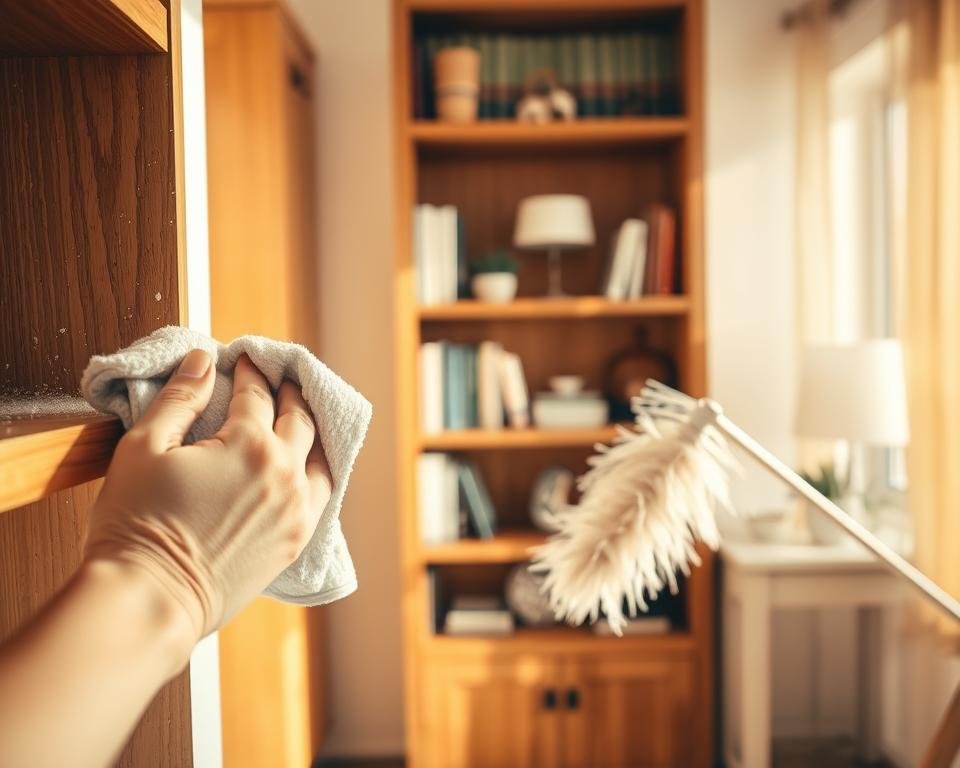
Choosing between professional cleaning and DIY dusting depends on several factors. These include the time needed and the complexity of the cleaning tasks. Professional cleaners use advanced tools and know-how to remove dust deeply, which can be tough to do yourself.
DIY cleaning can save money, but it has its own challenges. You must avoid common dusting mistakes to ensure effective cleaning.
It’s wise to hire professionals for big dust removal jobs. This is true for areas that are hard to reach, like ceilings and light fixtures. These spots often get missed.
Professional cleaners have the right tools and skills. They clean thoroughly without harming your belongings or electronics.
If you choose DIY cleaning, picking the right tools and methods is key. Microfiber cloths are great because they catch almost all dust. It’s important to dust at least once a week, focusing on places like under beds and couches.
Vacuuming with a HEPA filter and using damp cloths also helps. These methods keep dust from getting back into the air.
Some dusting mistakes can really reduce how well you clean. Using paper towels is a big no-no because they just move dust around. Not dusting high spots or not using extension tools can also leave places dusty.
Using the wrong cleaning products can also harm surfaces. Being aware of these mistakes can make DIY cleaning better. But, don’t overlook professional cleaning for the best results.

Keeping rental properties clean and healthy is key. Regular air circulation helps prevent dust buildup. This makes the air fresher and easier to breathe.
By using fans or opening windows, tenants can improve airflow. This lets in cleaner air, making the home more comfortable.
Regular air circulation is vital for less dust. It lowers humidity, which helps dust settle less. This is great in damp places where dust mites love to live.
It improves the air quality inside, making it healthier for everyone.
Air purifiers are a big help in keeping dust away. They catch and filter out tiny particles. This reduces allergens and makes the air cleaner.
Getting a good air purifier is a smart choice. It helps fight dust and health problems, making homes safer.
Simple habits can make a big difference in keeping homes dust-free. Damp dusting, vacuuming regularly, and cleaning ceiling vents are key. These actions cut down dust levels a lot.
By sticking to these habits, tenants make their homes better. They also help keep the property in top condition for others.


