
- 10/10/2025
- Category: Expert Tips
- Author: Kristian Yordanov
- 62
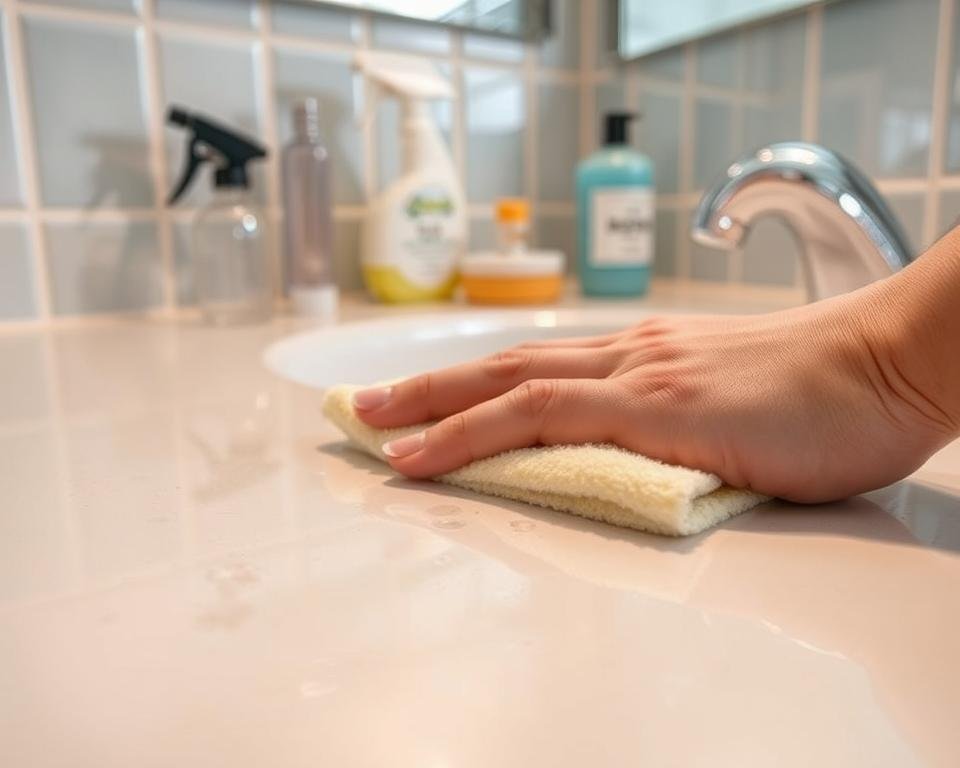
Ever wondered why your bathroom keeps getting white or cloudy spots, no matter how clean you keep it? Hard water stains are a big problem. But, knowing why they happen and how to clean them can keep your bathroom looking great.
Hard water stains come from minerals like calcium, magnesium, and iron in the water. When the water dries, these minerals leave behind tough stains on surfaces. Since about 85% of UK homes deal with hard water, finding good cleaning methods is key.
These stains not only look bad but also cause problems like clogged pipes and skin issues. To keep your bathroom looking and working well, it’s important to remove and prevent these stains. By using the right cleaning methods and prevention, you can keep your bathroom clean and welcoming.
Knowing why hard water stains happen is key to keeping your bathroom clean. Hard water stains come from water full of minerals like calcium and magnesium. When this water dries, it leaves behind deposits that can look like chalky white or brown marks.
Mineral deposits are the main cause of hard water stains. Calcium often leaves a white mark, visible on metal like taps and showerheads. Iron can cause orange or reddish stains, often seen near faucets and toilets. Manganese leads to brown or black stains, which can ruin sinks and toilets.
Bathrooms are more prone to stains because of the hot water used often. Hot water makes mineral deposits form faster. So, showers, baths, and sinks are where you’ll find these stubborn stains. Keeping these areas clean is vital for bathroom upkeep.
Hard water stains in bathrooms are tough to clean. They come from mineral deposits in hard water, found in about 85% of US homes. Calcium and magnesium cause limescale buildup, leaving ugly marks on surfaces like showerheads and faucets.
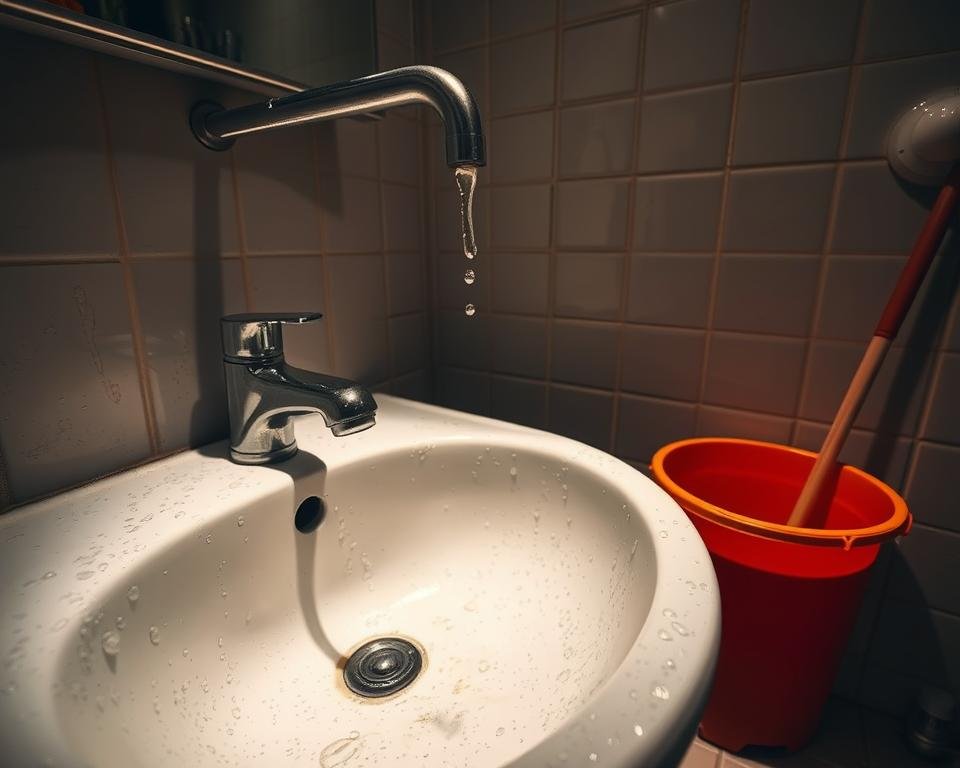
Standard cleaning products don’t work well on hard water stains. They’re not made to break down mineral deposits well. This means cleaning takes a long time without good results. On average, a household spends $500 a year on cleaning products and services for these stains. Yet, many find these solutions don’t leave surfaces spotless.
Stains from hard water get worse over time. Water keeps adding mineral layers, making cleaning take up to 30% more time. It’s best to clean shower and tub surfaces weekly to stop this buildup. As stains get older, they become harder to remove, often needing professional help or strong home remedies.
This gradual buildup not only looks bad but also makes cleaning harder. A good cleaning routine and special cleaners for hard water stains can help a lot. They make a big difference in dealing with these ongoing problems.
Hard water stains are tough because of minerals like calcium and iron. These minerals can leave ugly stains on bathroom items. To get rid of them, you need professional cleaning methods.
Acidic cleaners are key in tackling hard water stains. CLR Brilliant Bath Cleaner is a top choice, having won a Good Housekeeping Award. It dissolves the minerals causing stains.
For a DIY fix, mix equal parts water and vinegar. Here’s how to use it:
For toilets, Scrubbing Bubbles Power Stain Destroyer is great. Or, try a vinegar and baking soda mix. Let it sit for about 40 minutes for a deep clean.
Steam cleaning is perfect for tough stains. It gets deep into the stains, removing them without harsh scrubbing. It’s great for tile grout and around fixtures, keeping them safe while cleaning well.
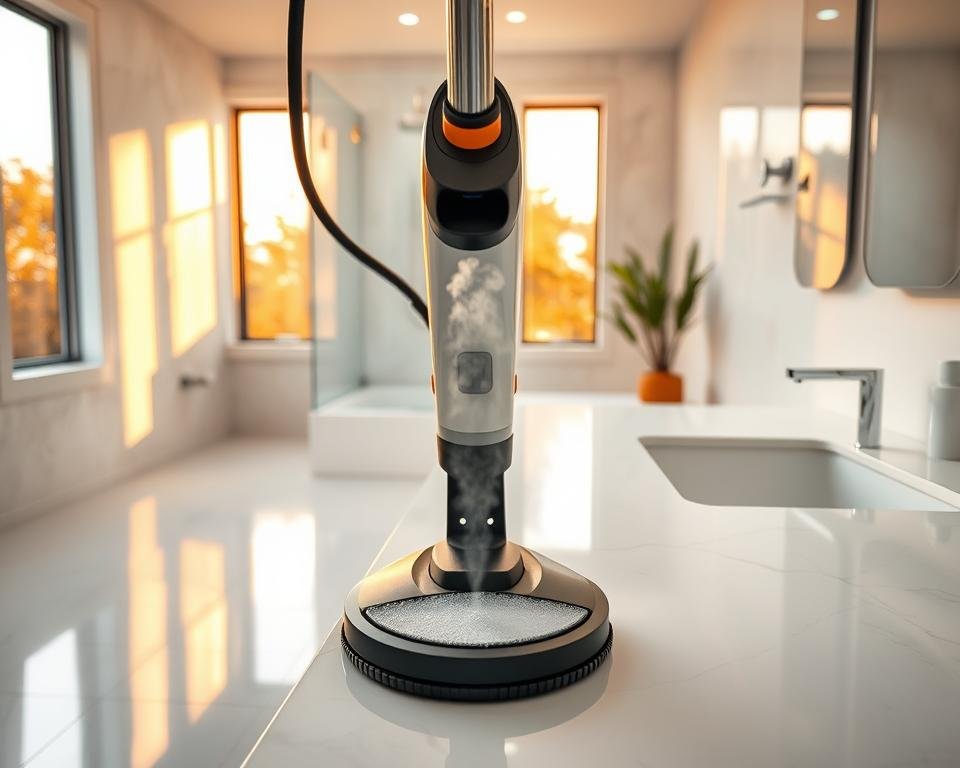
Choosing acidic cleaners or steam cleaning benefits is key. Knowing professional cleaning techniques keeps your bathroom stain-free and clean.
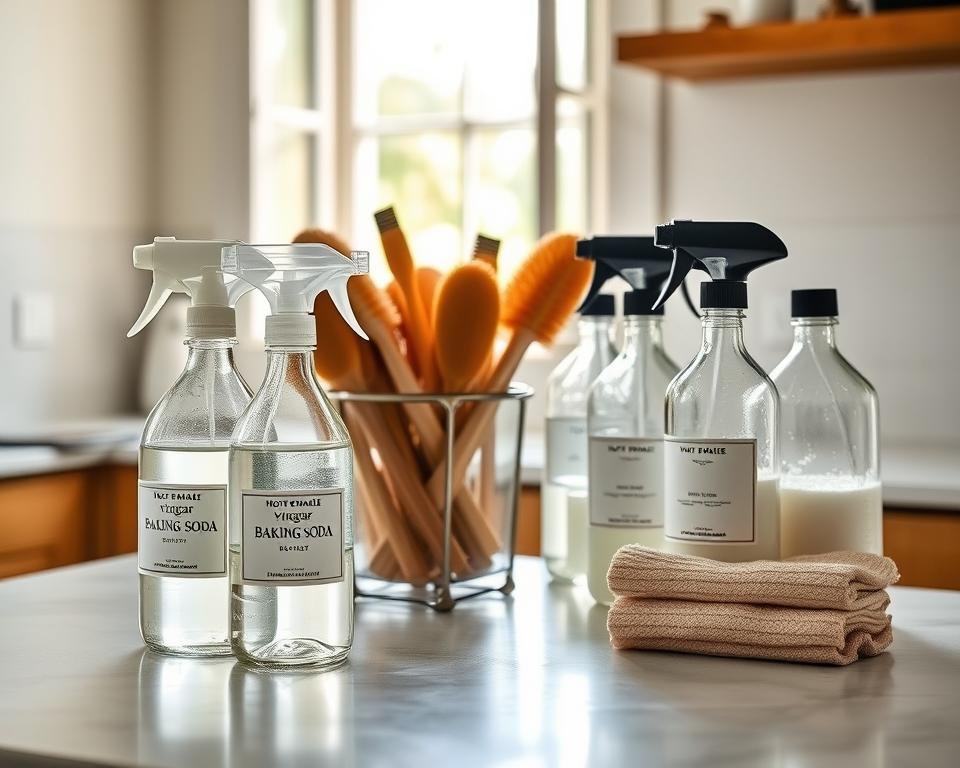
Removing hard water stains needs special products and methods. Vinegar, baking soda, and citrus-based mixes work well for everyday cleaning. For tough stains, you might need commercial descaling agents to remove mineral build-ups.
Natural cleaners are good for the environment and don’t expose you to harsh chemicals. Vinegar is great at dissolving mineral deposits. Aunt Fannie’s Extra Strength Cleaning Vinegar is more effective than regular vinegar.
Mixing vinegar and water can break down mineral deposits in about 15 minutes. Adding baking soda to vinegar creates a fizz that helps lift stains. This method doesn’t leave any bad smells or residues.
Citrus-based cleaners are also good for a fresh smell. They dissolve hard water stains and smell nice. Use them in well-ventilated areas to avoid strong smells.
For really tough stains, natural cleaners might not be enough. That’s when commercial descaling agents like CLR Brilliant Bath Foaming Action Cleaner are needed. CLR works well on metal surfaces and removes soap scum.
But, it has a strong smell, so make sure you ventilate well. It costs $12 but can be found for less at Walmart and Target.
Products like Mr. Clean Magic Eraser give quick results without soaking. But, they can wear down fast with tough stains. You might need to use more than one sponge for big clean jobs.
Commercial descaling agents are key for keeping homes clean where hard water is a problem. They help restore surfaces to their original state. Always follow the soaking times and safety tips for the best results.
Keeping rental properties clean and appealing is key. Hard water affects 85% of U.S. homes, causing mineral buildup. Calcium and magnesium harm bathroom fixtures and appliances. Water softeners and cleaning strategies are crucial for maintenance.
Water softeners greatly reduce mineral buildup. They remove calcium and magnesium ions, preventing stains and limescale. This keeps surfaces clean and appliances working better.
Softer water also makes detergents up to 30% more effective. This can lower utility bills. Regular water softener maintenance is important for upkeep and tenant happiness.
Regular cleaning is vital for rental property upkeep. It prevents hard water stains from building up. Encourage tenants to dry surfaces after use to stop mineral deposits.
Using mild, acidic cleaners can dissolve minor build-ups. Monthly descaling can keep fixtures efficient, extending their life by 30-50%. This ensures a pleasant living space for tenants.


