
- 08/10/2025
- Category: Expert Tips
- Author: Kristian Yordanov
- 59
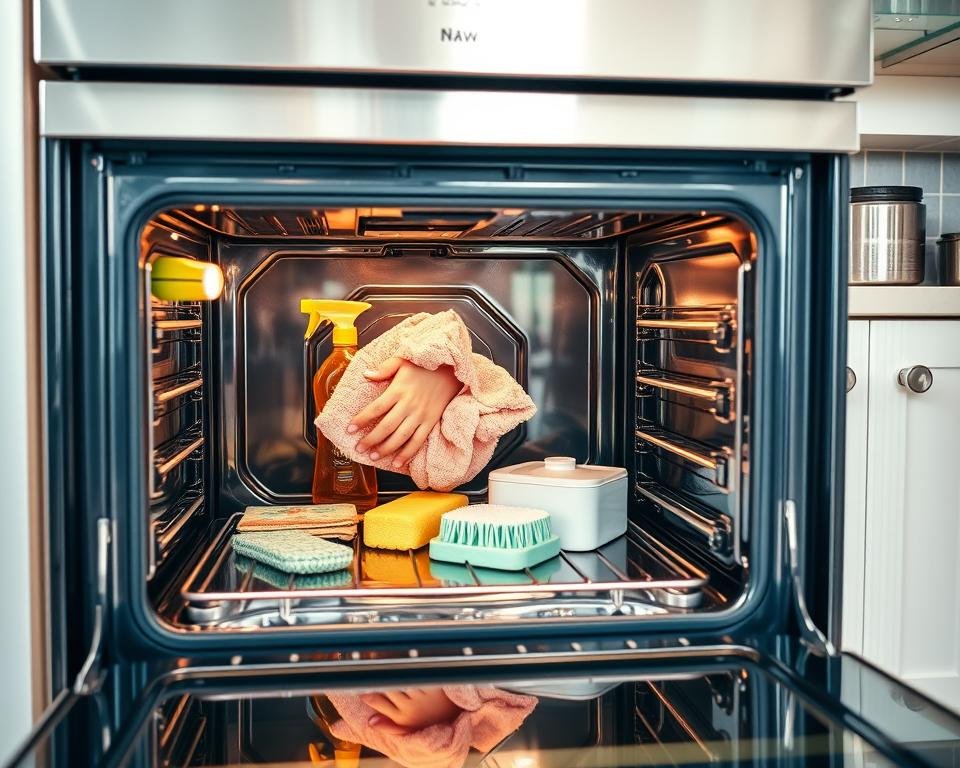
Did you know a dirty oven could cost you your security deposit during tenancy cleaning inspections? Many tenants overlook the significance of a clean oven, yet it’s a critical factor in your end of tenancy cleaning success. This guide will explore effective methods to ensure your oven meets the high cleanliness standards demanded by landlords and letting agents. This will help protect your deposit.
Starting with a detailed appliance assessment is crucial for effective oven cleaning. It helps you pinpoint what needs cleaning and how deep the task will be. This initial step is key to understanding the scope of the cleaning process.
First, inspect the trays and racks for wear or damage. Look closely at the oven’s condition. Ensure the fan is clear of grease, as blockages can harm its performance. Also, check the glass door for smudges or stains that might block your view while cooking.
Focus on areas with burnt-on grease, as this residue significantly affects cleanliness. Strong smells often signal the presence of food particles that need cleaning. By noting these details, you set a clear path for the cleaning process.
When it comes to oven cleaning, picking the right cleaner is key. Commercial oven cleaners offer strong results. On the other hand, a blend of bicarbonate of soda and vinegar can be a natural and effective choice.
If you choose a commercial cleaner, make sure to spread the gel or foam evenly. This ensures the cleaner can reach and remove tough stains. Always follow the product’s instructions for soaking time to get the best results.
Opting for a natural cleaner is both good for the environment and effective. Combine bicarbonate of soda with vinegar to form a paste. This mixture is great for tackling stubborn grime. Apply it to the affected areas and let it sit for a while. This allows it to break down the grime before wiping it away.
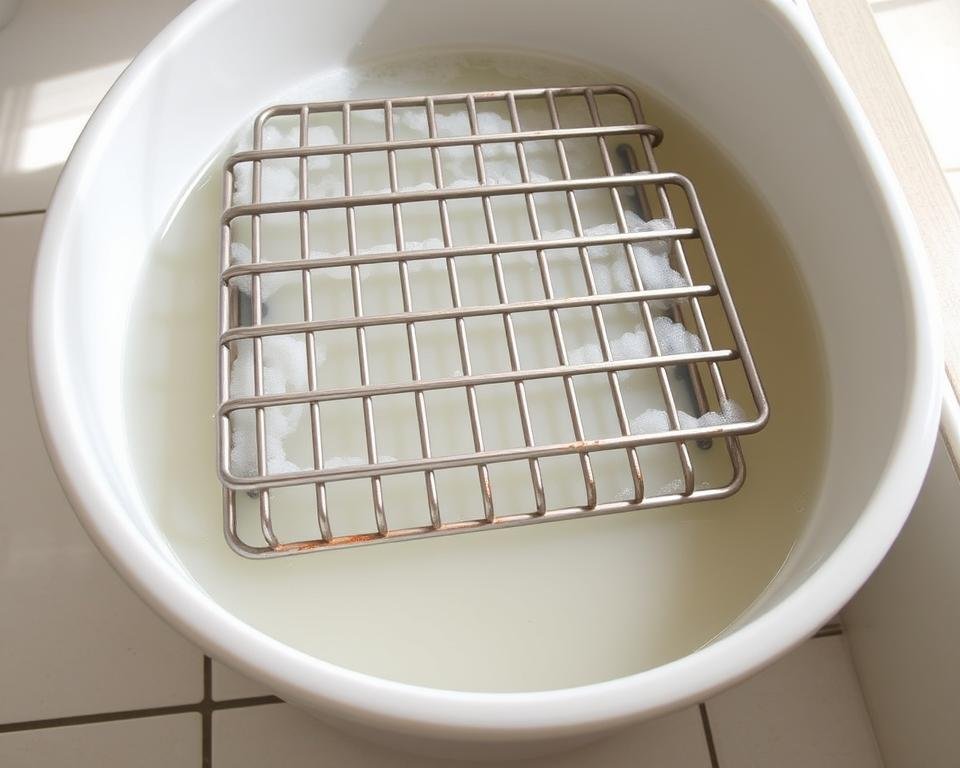
Cleaning oven racks can be a daunting task, thanks to the buildup of grease and carbon. To get the best results, take the time to soak the racks properly. This approach ensures a deep clean, removing stubborn grime effectively.
Begin by removing the racks from the oven. Choose a sink or bathtub, then fill it with hot water and a good degreaser. Let the racks soak for a while, allowing the solution to break down tough deposits. This initial soak is key for effective cleaning.
Once soaked, use a wire brush or scouring pad to scrub the racks. The degreaser and soaking should make it easier to remove carbon and grease. Make sure each rack is well cleaned before rinsing with water. This method ensures a clean and hygienic oven.
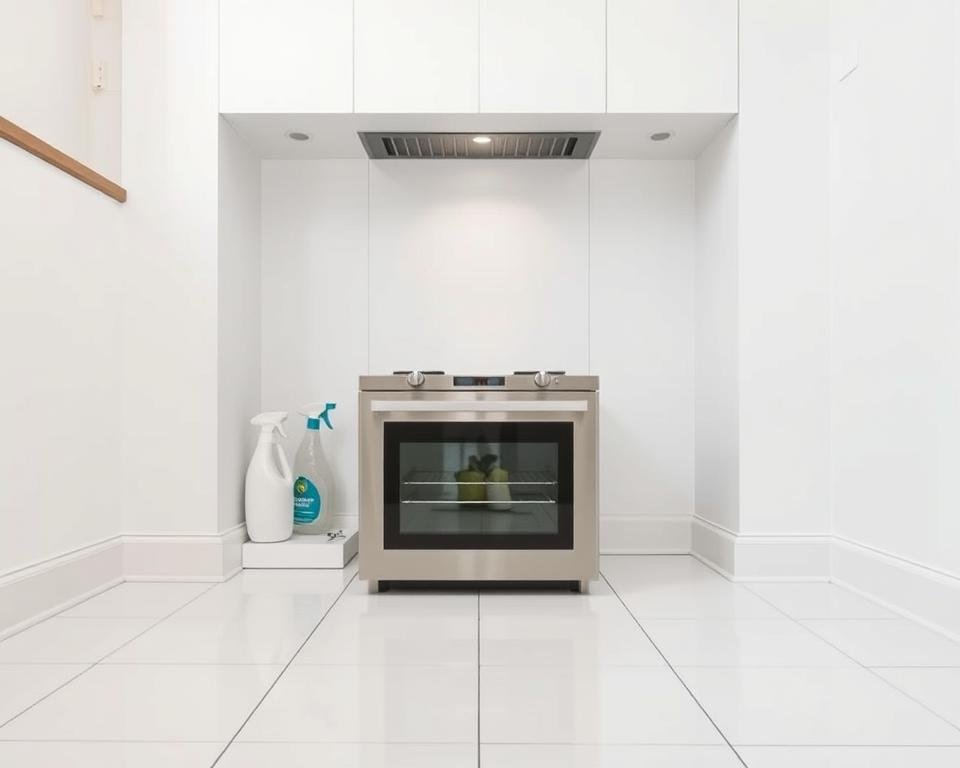
Keeping your kitchen spotless goes beyond just the oven’s surface. It’s essential to clean behind the oven, where dust and debris tend to gather. This not only enhances the oven’s look but also boosts its performance.
Start by gently moving the oven to reach the hidden areas behind and beneath. A hoover is your best tool for removing dust, crumbs, and grease that have accumulated. This step is vital for a comprehensive clean.
While cleaning behind the oven, remember to clean any skirting boards or tiles that get exposed. This extra step guarantees a thorough kitchen clean, leaving no spot untouched.
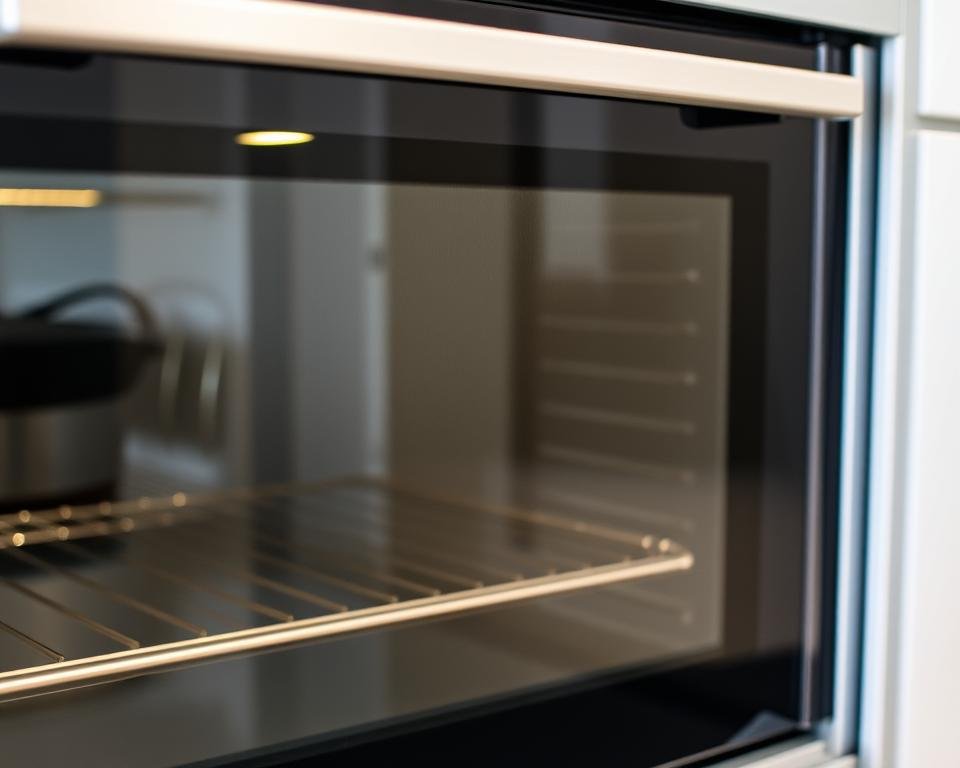
The oven door and glass panels are key areas that need special care during cleaning. Begin by using a scraper blade to carefully remove any stuck-on food from the glass panels. This step is vital for ensuring you can see your dishes clearly.
When using the scraper blade, be gentle to avoid scratching the glass. Gently move it over the surface, focusing on tough spots. By removing these particles, you’ll not only make the oven door look better but also improve its performance.
After removing the residue, it’s time to polish the glass panels. A streak-free glass spray is perfect for achieving a clear finish. Apply the cleaner evenly and use a soft cloth to buff the surface. This will leave the glass panels shining, enhancing visibility while cooking.
In the quest for a spotless oven, attention to detail is crucial. Often, areas such as control knobs and rubber seals go unnoticed, yet they significantly contribute to the overall hygiene and functionality of the appliance. A thorough clean will not only enhance appearance but also help prevent grease buildup that can affect performance.
To achieve optimal cleanliness, start by removing the clean oven knobs if your model allows it. Doing so facilitates a much more comprehensive approach to cleaning around the dials. Use a soft cloth or sponge, along with a suitable cleaner, to wipe away any residues that may have accumulated.
Pay special attention to the rubber seals and inner hinges. These areas are notorious for collecting grease buildup over time. Employ a damp cloth to clean the seals thoroughly. Ensure that all stuck debris is removed, allowing for a proper seal when the oven door is closed, resulting in more efficient cooking.
Completing a thorough cleaning of your oven is just the beginning. Before concluding the task, it’s vital to carry out a final inspection. This ensures every nook and cranny meets rigorous cleanliness standards. It’s your chance to verify that no corners have been overlooked and that the appliance is in pristine condition for your tenancy inspection.
After cleaning, it’s advisable to leave the oven door ajar. This allows fresh air to circulate within the oven’s interior. This method aids the drying process and helps dissipate any remnants of cleaning products. It ensures the oven is not only clean but also fresh-smelling.
The final step is performing an odour test. Approach the oven and check for any lingering smells. A successful inspection will require that there are no unwanted odours present. Failing this critical step could lead to undesirable repercussions. But passing the odour test is essential for guaranteeing that your deposit is returned. With these steps completed, you can confidently prepare for the handover.


