
- 05/10/2025
- Category: How To
- Author: Kristian Yordanov
- 52
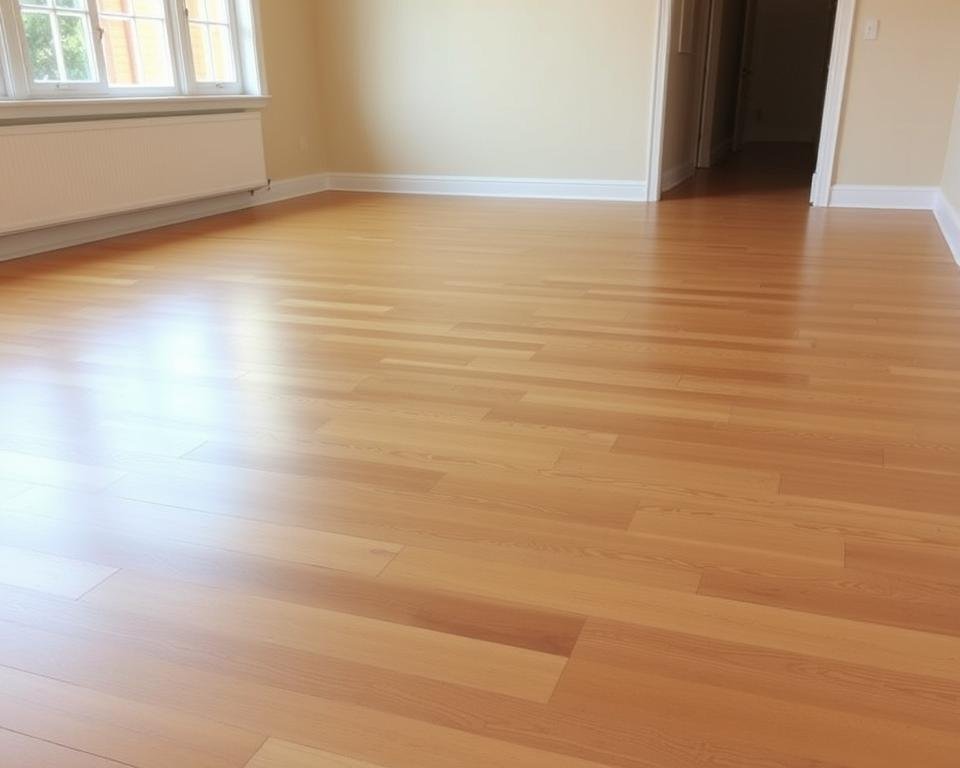
Ever thought about how clean hardwood floors can affect your rental deposit return? It’s a common belief that all cleaning tasks are equal for end of tenancy standards. But, the truth is, about 30% of tenants lose part or all of their deposit due to cleaning issues, mainly with hardwood floors. Making sure these floors are spotless not only pleases landlords but also makes the property more attractive to future renters.
At the end of your tenancy, it’s important to do more than just basic cleaning. You need to deep clean the hardwood floors to keep them in top shape. Both landlords and tenants must work together to keep the place clean and prevent mould or pests. By following a detailed cleaning plan for hardwood floors, you can greatly improve your chances of getting your deposit back.
Clean hardwood floors are key for a good first impression during tenancy inspections. The state of the floors can make or break a rental’s appeal. If floors are dirty or damaged, it can upset potential tenants and hurt deposit returns.
Knowing what’s expected in floor care can avoid disputes with landlords. It’s all about keeping the floors in top shape.
Dirty floors can make a property look less inviting. Prospective tenants might think less of a place that’s not well-kept. This can lead to longer times without tenants, making it crucial to clean floors well.
Landlords struggle to justify taking back security deposits for cleanliness issues. If floors aren’t clean, tenants might not get their deposit back.
Landlords often complain about floor damage or dirt. These issues are not just about looks but also about who’s responsible. Knowing these complaints helps tenants keep their place in good shape.
Regular cleaning keeps floors looking good day-to-day. It includes simple tasks like sweeping or vacuuming. Deep cleaning, on the other hand, gets rid of tough stains and dirt.
It needs special tools and methods. Knowing the difference helps tenants meet the high standards for tenancy inspections.
Cleaning hardwood floors can be tricky. You need to tackle stains, scratches, and the extra cleaning needed in busy areas. Knowing the right cleaning methods and prevention tips can help keep your floors looking great for longer.
Stains on hardwood floors can be a real problem. It’s important to clean them quickly to avoid lasting damage. Use gentle cleaners made for hardwood to treat most stains.
For harder stains, try a mix of vinegar and water. But be careful not to soak the floor too much, as this can harm the finish.
Scratches and scuffs are common in busy spots. Use soft methods to avoid making things worse. Light scuffs can be buffed out with a sock or a fuzzy tennis ball.
For deeper scratches or dents, use wood fillers or special repair kits. These can fix the floor without damaging it further.
Cleaning busy areas of your hardwood floors needs extra care. Start by sweeping daily to remove dirt and debris. Vacuum weekly and mop every two weeks with the right cleaners.
Having a no-shoes rule can help keep your floors cleaner. This reduces the dirt that gets tracked in, making your floors last longer.
Preventing water damage is key when cleaning hardwood floors. Avoid using too much water, as it can cause warping. Switch to a damp microfiber mop instead of a wet one.
Always clean spills right away to prevent stains and damage to the wood.
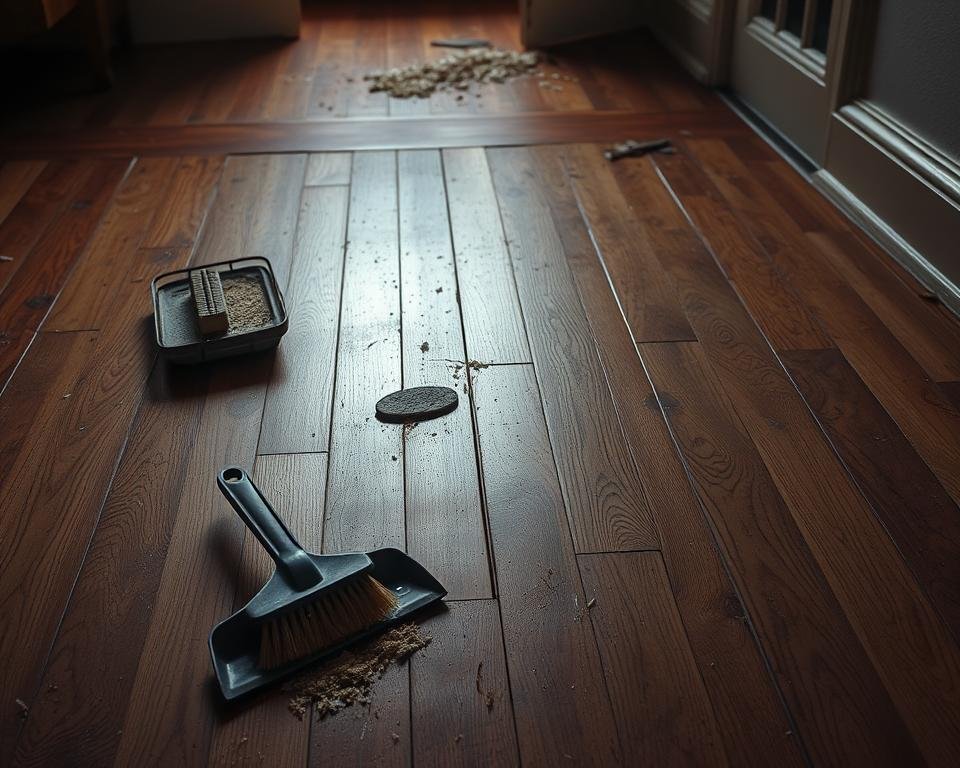
Cleaning hardwood floors needs care to keep them looking good and lasting longer. The right cleaning products are crucial. They help keep the floors looking great.
Choosing the right cleaner is important. Look for cleaners that are pH-neutral. They won’t harm the finish. A mix of vinegar and water is a good, cheap option.
These cleaners are safe for homes with pets and kids. They avoid harsh chemicals.
Removing dust and dirt is key. Sweep or vacuum regularly, daily if you have pets. A microfiber mop picks up dirt well, making cleaning 50% more effective.
For pet hair, use a rubber broom. It removes hair without scratching the floor.
Dealing with tough stains is a challenge. Use a gentle scrub with a hardwood cleaner. A vinegar and water mix can remove many stains without harming the finish.
Stay away from harsh chemicals. They can damage the floor over time.
Polishing floors is important for shine. Natural oils can make floors look new again. Regular polishing protects floors and makes them last longer.
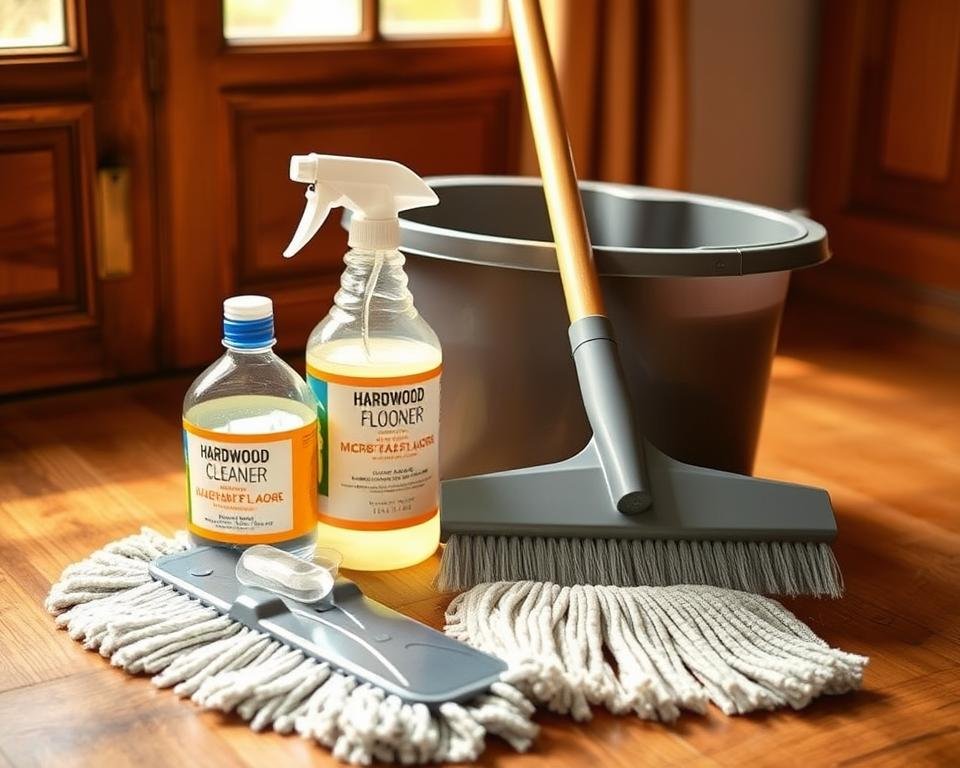
Cleaning hardwood floors can be a tough choice between professional cleaning and DIY. Each has its own benefits and downsides. Think about how much time you have and the condition of your floors. Professionals use special tools and solutions for a deep clean, which is great for tough stains or scratches.
There are times when you should get a professional to clean your floors. If you have deep stains, scratches, or haven’t cleaned in a while, they can make your floors look new again. Also, if your floors get really dirty, experts can make them shine.
If you prefer DIY, there are good ways to clean your floors. Start by sweeping to get rid of big dirt particles. Then, vacuum to catch the small stuff. A damp microfiber mop is also effective, as it uses less water than regular mops.
There are common mistakes that can harm your floors. Don’t use too much water when mopping, as it can make the wood swell. Avoid steam mops, as they can get into small spaces. Also, don’t use harsh cleaners like vinegar or lemon juice, as they can damage the finish. By avoiding these mistakes, you can keep your floors looking great for longer.
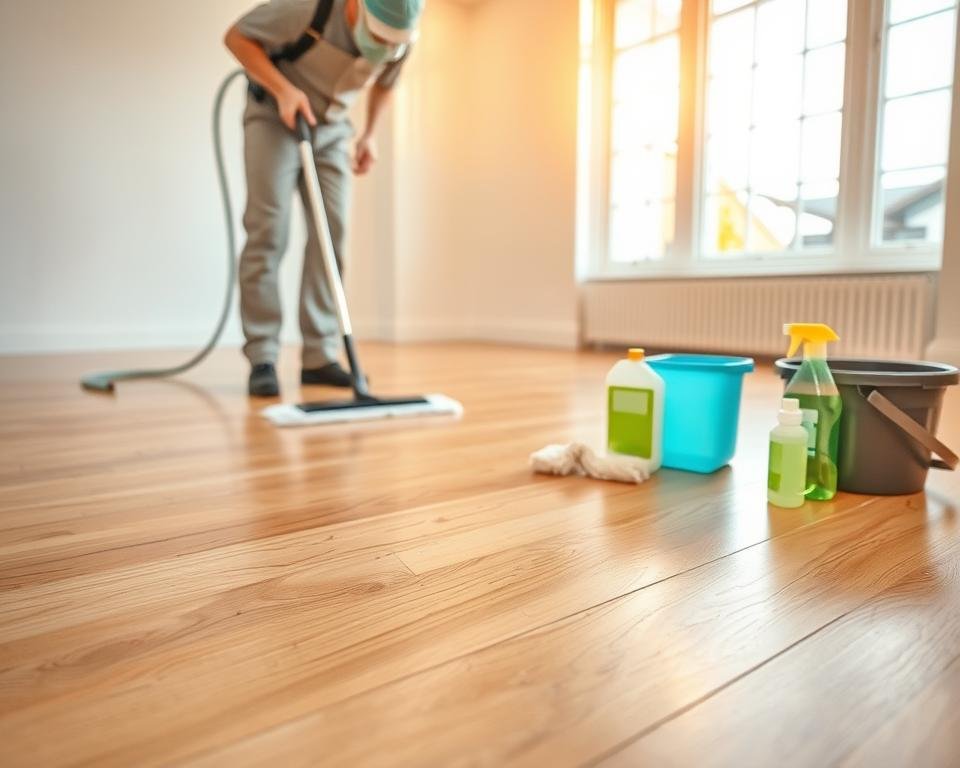
To keep hardwood floors looking great, it’s important to take care of them before problems start. Simple steps can make a big difference. For example, using floor mats in busy spots helps keep floors clean and safe from damage.
Floor mats are a key defence for hardwood floors. They catch dirt, dust, and moisture before they can harm the wood. By placing mats at entrances, you can reduce the risk of scratches and stains.
Dusting your floors regularly is crucial. Use a soft brush to sweep daily and avoid scratches. For deeper cleaning, use a damp mop once a week. This keeps your floors looking new.
Using furniture pads and trimming pet claws can prevent damage. Avoid dragging heavy items to avoid scuffs. These steps keep your floors beautiful and protect your deposit.
Cleaning hardwood floors is key to getting your deposit back. If the floors are not clean, landlords might take money from your deposit. So, a deep clean is important to follow the tenancy rules.
Landlords often say dirty or damaged hardwood floors are the main reasons for disputes. This is during the tenancy inspection.
Regular cleaning means sweeping and mopping often. Deep cleaning removes deep dirt and makes floors look new again.
To remove stains without harming the finish, first figure out what kind of stain it is. Then, use gentle cleaners like vinegar and warm water or special hardwood cleaners. This way, you can get rid of stains without damaging the finish.
For scratches and scuff marks, use soft scrubbing or wood fillers. Keeping up with regular maintenance can also help hide these marks.
In busy areas, you need special cleaning solutions and more cleaning often. This helps to keep the floors looking good despite the wear.
Use little water and the right cleaners to avoid warping or damage. It’s crucial to control how much water you use when cleaning.
Don’t use too much water, as it can warp the wood. Also, avoid harsh chemicals that can strip the finish. Paying close attention and following guidelines is key to a good clean.


