
- 09/10/2025
- Category: How To
- Author: Kristian Yordanov
- 65
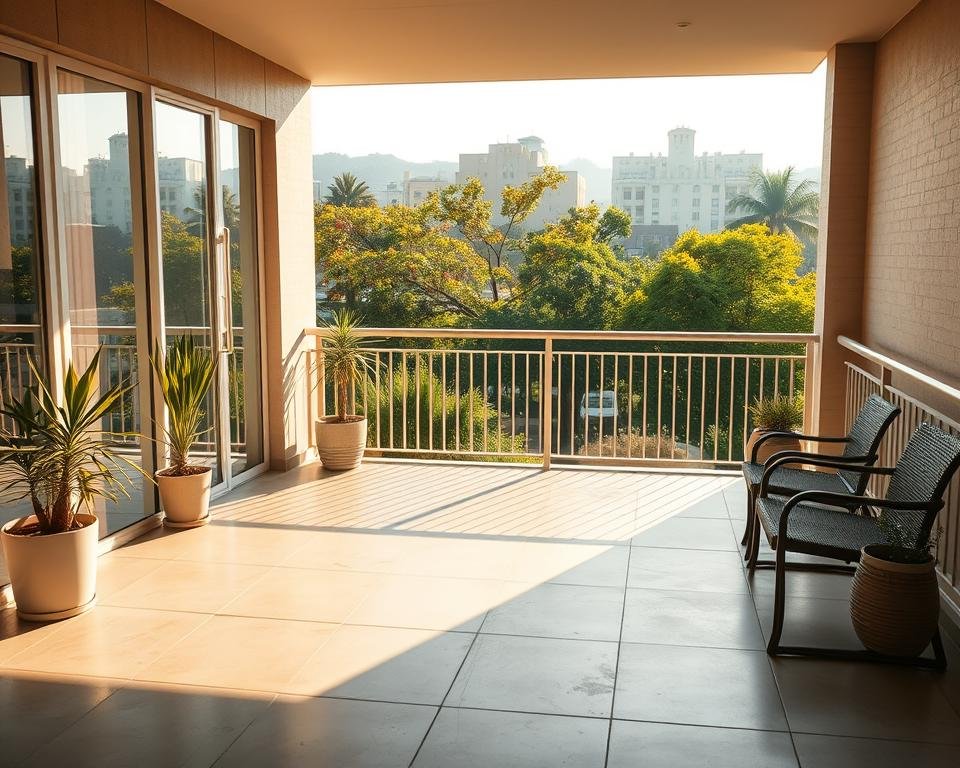
Are you a tenant getting ready to leave a rented place? Ever thought about how your balcony and outdoor areas might affect your deposit return? Around 80% of tenancy agreements demand professional cleaning when you leave. This makes keeping these areas clean very important.
Dealing with dirt, mould, or general mess can be tough. But, it’s crucial for your deposit and how your landlord sees your place. In this article, we’ll show why clean balconies and outdoor areas are key during tenancy cleaning. It saves you time and money and makes your property more appealing.
Clean outdoor areas are key in end of tenancy cleaning. They affect both the money and look of rental deals. Keeping these areas clean is crucial for getting back deposits, as landlords expect high standards.
It’s important for tenants to clean balconies, gardens, and patios well. This ensures they meet the cleanliness standards in their rental contracts.
Dirty balconies and patios can cause big problems when tenants try to get their deposits back. If they don’t clean up properly, they might have to pay for professional cleaning. This can reduce the amount they get back.
Pet waste and damage can make things worse. Tenants might need to fix holes or clean up waste to meet cleanliness standards. Paying close attention to these details is key for getting back the full deposit.
Landlords have clear expectations for outdoor space cleanliness in tenancy agreements. They expect tenants to mow lawns, weed gardens, and remove rubbish. Not meeting these standards can lead to deposit deductions.
This shows how important it is for tenants to clean thoroughly. It helps avoid losing money from their deposits.
Neglected outdoor areas can make a property less appealing. A clean garden or patio boosts the property’s look and value. It can also help attract better tenants in the future.
So, keeping outdoor spaces clean and welcoming is crucial. It leaves a good impression and can increase the property’s appeal.
Cleaning outdoor areas during tenancy comes with its own set of challenges. Tenants often face obstacles that need special techniques and products. From dirt and stains to organic growths, it’s key to understand these to keep outdoor spaces looking good.
Outdoor flooring gets dirty, often more so in winter. Removing dirt manually can be hard work. It’s important to choose the right cleaning products for different materials.
Experts recommend using pressure washers, starting with a low PSI to avoid damage. Regular sweeping can also help keep dirt away.
Winter’s moisture leads to mould and mildew. To clean mould, use a solution of equal parts water and oxygen bleach or a DIY mix with white vinegar. This not only looks better but also reduces health risks from allergens.
Cleaning railings and glass panels needs care. Use streak-free cleaners and soft cloths to avoid damage. Upholstered outdoor furniture also needs special care.
Use a mix of vacuuming and steam cleaning to remove mould and stains. This helps furniture last longer.
Bird droppings can be a big problem. The right tools, like a leaf blower, make cleaning patios and balconies easier. Regular checks help spot and fix these issues quickly, keeping the area clean and welcoming.
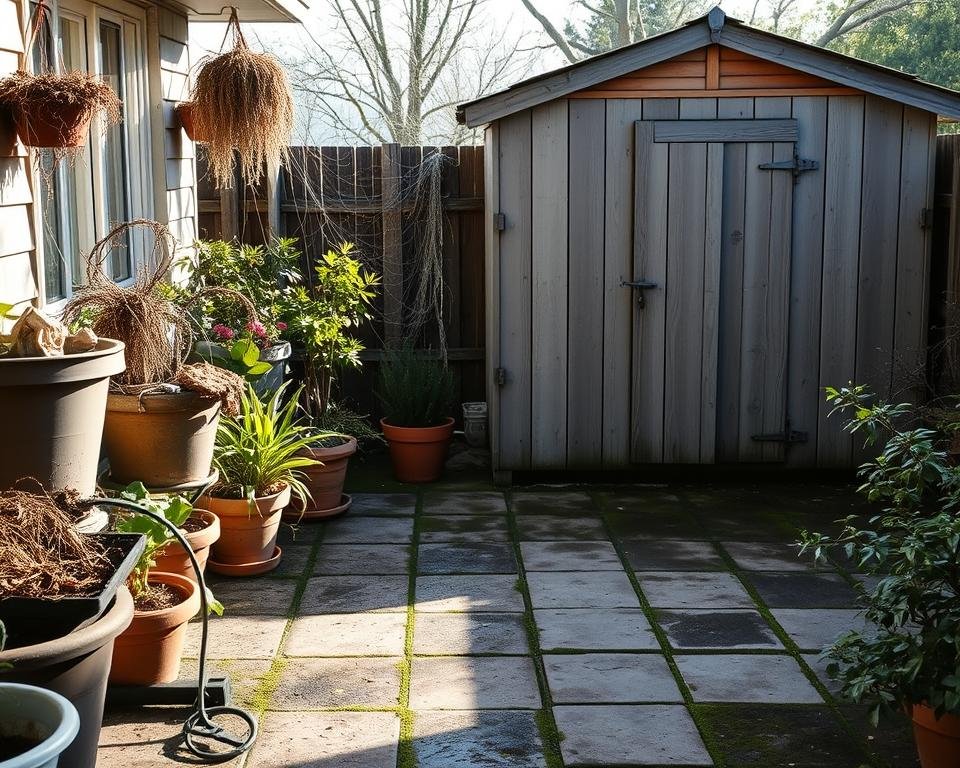
Cleaning balconies and outdoor spaces needs a careful plan for the best results. This guide will show you the key cleaning tools and solutions for outdoor areas. It will also give tips for safely cleaning glass and metal, compare pressure washing to manual cleaning, and share ways to remove tough stains without harm.
For top-notch surface care, you need the right cleaning tools. Here are some must-haves:
When cleaning glass and metal, safety comes first. Follow these steps for a clean finish:
Choosing between pressure washing and manual cleaning depends on your outdoor area’s needs. Pressure washing is great for removing tough dirt and grime from hard surfaces. It’s efficient and saves effort. On the other hand, manual cleaning is safer for delicate surfaces and where precision is key. The best approach often combines both methods.
Dealing with stubborn stains can be tough, but there are effective ways. Here are a few strategies:
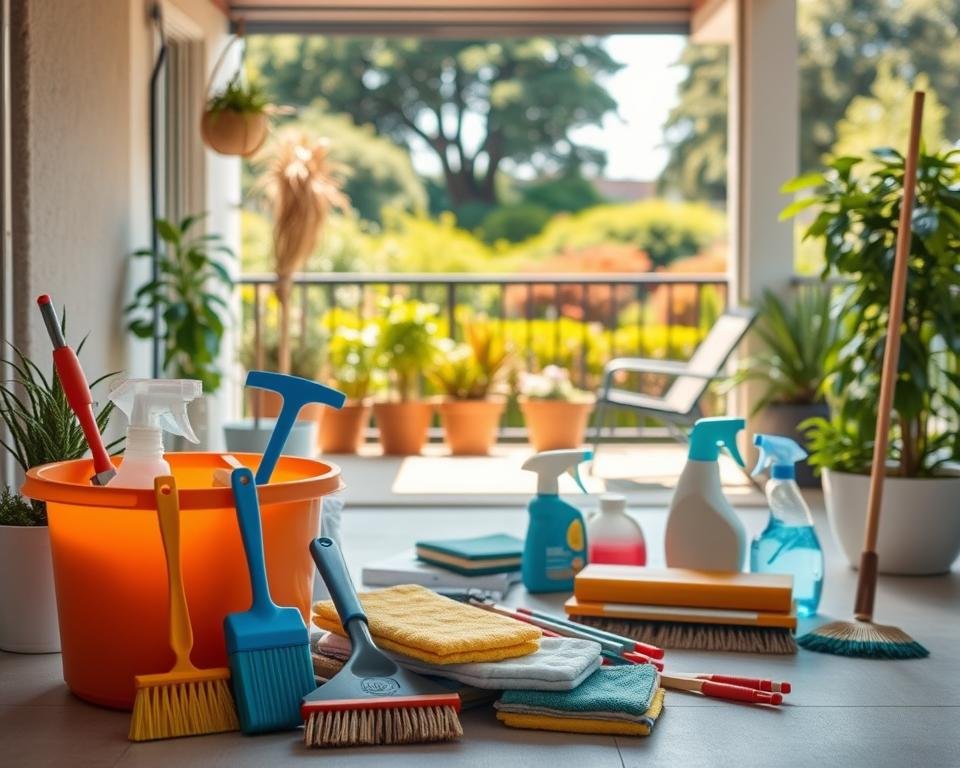
Choosing between professional cleaning and DIY outdoor maintenance can be tough. It’s important to weigh the pros and cons of each method. Professional cleaners are great for deep cleaning big or complex outdoor areas. DIY fans, on the other hand, can handle upkeep on smaller spaces like balconies and patios.
Professional cleaning is key in certain situations. It’s best for tackling tough grime, mould, or lots of debris. Experts use special tools for different surfaces, making cleaning more effective. For big properties, hiring pros can save up to 50% of your time compared to DIY.
If you prefer DIY, there are effective methods to try. Cleaning surfaces every two weeks prevents dirt from building up. Use outdoor cleaning products and avoid harsh chemicals to avoid damage. Adding storage can also help keep your space tidy and clean.
Many people make mistakes that can harm their deposit returns. Using the wrong products or skipping safety gear can damage surfaces and harm health. Also, neglecting outdoor furniture and accessories can lead to allergens. Regular cleaning boosts your space’s look and keeps its value up.
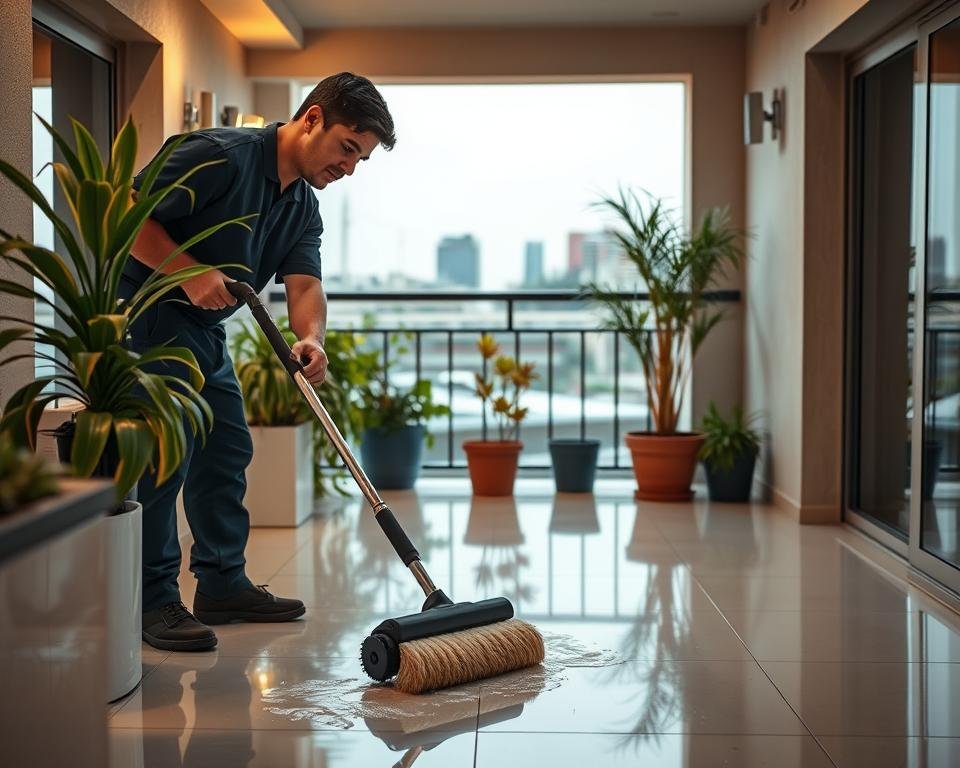
Keeping outdoor areas clean can make end of tenancy cleaning less stressful. Regular upkeep is crucial to keep balconies and patios looking good. Simple actions like sweeping often and removing trash quickly stop dirt from building up.
Preventative cleaning cuts down the work needed at the end of a tenancy. Regular checks for damage and fixing issues quickly keep outdoor spaces in good shape. Tips like cleaning gutters twice a year can also help, reducing drainage problems by up to 40% in rainy seasons.
Protective coatings add extra defence against the elements. For example, a thin layer of car wax can make water bead and run off, not seep into the surface. Without these coatings, about 70% of outdoor furniture can corrode or discolour, leading to expensive replacements.
To keep an area clean, use best practices to stop dirt and debris from building up. Use custom-made furniture covers to protect while keeping things looking good. Also, secure balcony furniture during bad weather to avoid damage. These steps help keep outdoor spaces clean, making the final clean-up easier.


