
- 08/10/2025
- Category: Expert Tips
- Author: Kristian Yordanov
- 63

Are you confident your carpets will pass the end of tenancy cleaning inspections? Keeping carpets spotless is crucial for tenants aiming to get their deposits back without issues. The Tenant Fees Act of 2019 clarifies that while landlords can’t force professional cleaning, tenants must ensure the property, including carpets, is returned to its original state. Given that many deposit disputes stem from cleaning problems, a systematic approach is essential.
Referencing your original inventory can be the difference-maker. It helps ensure your carpets not only look impeccable but also meet the high standards set by landlords and estate agents.
Effective carpet maintenance begins with a thorough vacuuming routine. This step is vital for removing surface dust and debris, crucial in high-traffic zones where dirt tends to build up. A meticulous vacuuming process not only enhances your carpet’s appearance but also extends its life.
One key aspect of vacuuming is moving furniture. This action grants access to hidden dust and dirt beneath large items, often overlooked. Regularly moving furniture during cleaning boosts the effectiveness of your carpet maintenance efforts.
Crevice tools are essential for a detailed clean. They enable you to reach along skirting boards and carpet edges, areas prone to dust and debris accumulation. This meticulous approach ensures a comprehensive clean, leaving no spot untouched.
Acting quickly on stains is key to keeping your carpets looking good. Waiting too long can cause permanent damage, making stain removal harder. Using the right products for each stain type boosts your cleaning success. Quick action helps avoid losing your deposit due to missed stains.
Each stain needs a unique approach. Wine calls for vinegar, grease might need laundry detergent, and mud is best with warm water. Choosing the right products for each stain is crucial for the best results.
Blotting is the best method for stain removal. Rubbing can embed the stain deeper, so dab gently with a clean cloth or paper towel. This technique lifts the stain effectively without harming the carpet, making prompt action even more vital.

For a deep clean, using a carpet machine or steam cleaner is vital. This is often needed before an end of tenancy inspection. Carpet deep cleaning boosts the look and hygiene of your floors, tackling tough stains and dirt.
Many letting agencies insist on hot water extraction for carpet cleaning. This method, also known as steam cleaning, gets deep into the fibres. It removes dirt and allergens that regular cleaning might miss. If renting a machine, make sure it uses hot water extraction for the best results.
After the deep clean, it’s essential to allow for drying time. Moisture trapped in the carpet can cause musty smells, undoing the fresh look you want. Good ventilation during drying helps air circulate and speeds up the process. This ensures your carpets not only look great but also smell inviting.
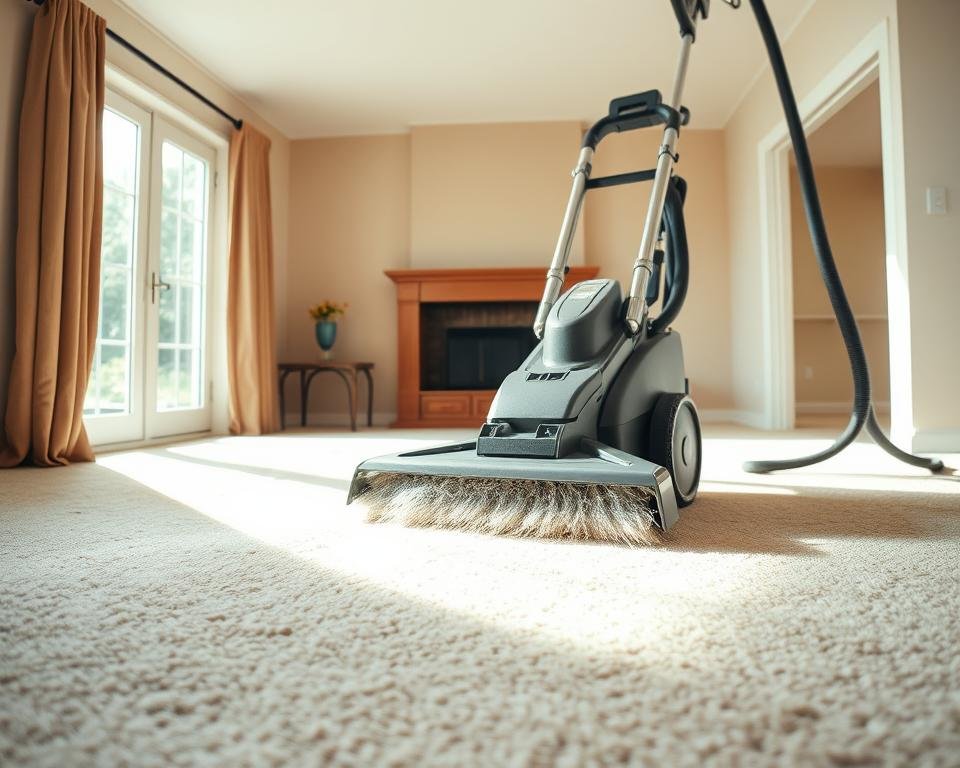
Lingering odours from pets or smoke can diminish the appeal of carpets during inspections. Effective odour removal is essential for creating a fresh environment. Adopting a proactive approach to pet hair management and odour elimination will significantly enhance the cleanliness perception of your carpets.
Using bicarbonate of soda is a straightforward way to tackle unwanted smells. Simply sprinkle it generously over the carpet and leave it for a few hours to absorb the odours. After that, hoovering the carpet will not only eliminate the bicarbonate but also the trapped smells, making a noticeable difference.
If some odours remain after using bicarbonate of soda, specialised neutralising sprays can be effective. These sprays are designed for smoke elimination and pet-related scents. Applying them as directed can further enhance odour removal, ensuring a fresher smelling carpet ready for inspection.
High-traffic carpet areas, such as hallways and stairs, quickly gather dirt and show wear. It’s vital to focus on these spots, as they significantly impact your home’s look during inspections. Make sure these key areas are spotless as part of your detailed cleaning plan.
Entrances and staircases bear the brunt of foot traffic, leading to dirt and grime build-up. A double cleaning approach for these zones is essential. Combine regular vacuuming with spot and deep cleaning to revive fibres and tackle tough stains.
When examining high-traffic carpet areas, look out for wear and dirt that might seem like neglect. Dirt can hide fibres needing deeper care, potentially affecting your deposit. A thorough check of these spots can avoid unnecessary deductions and leave a positive impression at the final inspection.
A final walkthrough is the last chance for tenants to check their property meets standards before handing over the keys. It involves making detailed final checks to ensure every area, including corners and near doorways, is dust-free. These spots are often missed, so it’s crucial to focus on them to achieve a clean finish and maintain a positive carpet appearance.
Give extra attention to hidden spots that tend to collect dust and dirt. A thorough inspection can uncover areas needing extra cleaning to pass the end-of-tenancy inspection.
Brushing the carpet pile can greatly enhance its look. This simple step improves the carpet’s appearance and shows the effort put into preparing for the inspection. Such care reflects responsibility and ensures the property’s condition meets expectations.
If you chose professional cleaning for your carpets before the end of tenancy inspection, keeping proof is key. It safeguards you against disputes over the property’s cleanliness. It also shows your dedication to maintaining the carpets.
Ensure you hold onto the invoice from the cleaning company. It acts as formal proof of the services provided. Also, capturing dated photos of the cleaned carpets can strengthen your case. These images are crucial if there are queries about the cleanliness.
Following your tenancy agreement is vital, as some require proof of professional cleaning. If your landlord or letting agent asks for evidence, having your receipts and photos ready will help. This approach can ease the exit process and improve your relationship with your landlord.


